GetAssetPack

Lincoln at Union Square, New York
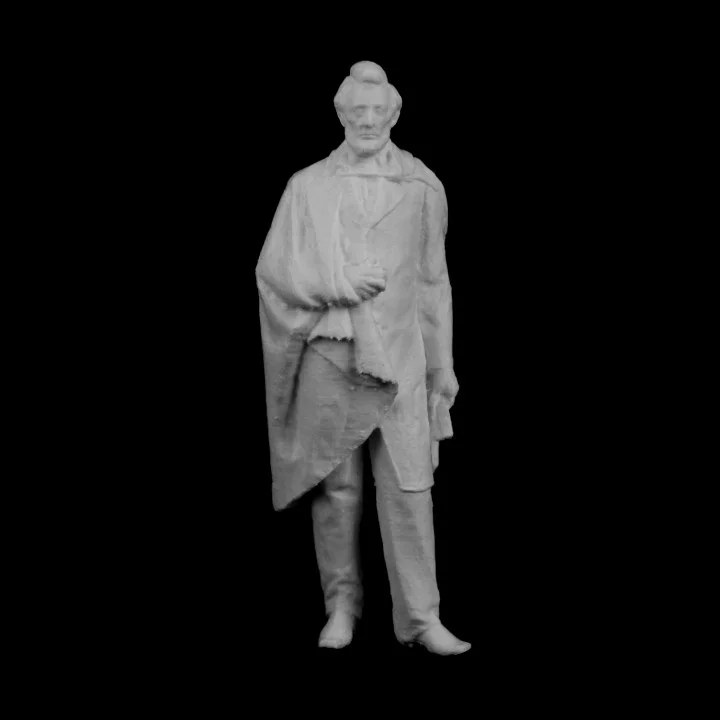
Lincoln at Union Square, New York
Type
3D Models
Dimensions
3D
Setting
Modern, Urban

A model of a larger-than-life bronze Abraham Lincoln sculpture at New York's Union Square.

One of three sculptural renditions of Abraham Lincoln (1809–1865) in New York City’s parks, this larger-than-life bronze by Henry Kirke Brown (1814–1886) stands vigil on a busy crossroads at the north end of Union Square Park. Abraham Lincoln was born in a log cabin in Hardin County (now Larue County), Kentucky, and was mostly self-educated. He settled in New Salem, Illinois, in 1831 and worked as a storekeeper, surveyor, and postmaster while studying law. In 1834, Lincoln was elected to the state legislature and served four terms, and was elected to Congress on the Whig ticket and served from 1847 to 1849. After this single term, he left politics and dedicated himself to a successful legal practice; it was not until the repeal of the Missouri Compromise in 1854 threatened to expand the practice of slavery in the West did Lincoln rejoin the national arena. He lost two bids for the Senate in 1856 and 1858, but made an impression on his state and the nation over the course of seven debates with Democratic opponent Stephen A. Douglas. Lincoln successfully ran for president as a Republican in 1860. While campaigning, he made his first visit to New York City in February 1860, and delivered a famous speech in Cooper Union’s Great Hall. By Inauguration Day in March 1861, seven southern states had seceded from the Union, and four more would follow in April. As the nation plunged into Civil War, Lincoln proved a skillful and thoughtful leader and orator. In 1863, he issued the Emancipation Proclamation to free the slaves and delivered the Gettysburg Address that eloquently memorialized fallen soldiers. Lincoln won re-election in 1864 against George McClellan. Five days after Confederate general Robert E. Lee’s surrender on April 9, 1865, Lincoln was assassinated by John Wilkes Booth while attending a play at Ford’s Theater in Washington, DC. He died the next morning. Lincoln’s funeral cortege traveled to all the principal cities in the United States, and arrived in New York…

Available on

Search by image

Upload a reference to find previews with similar colors, contrast, and detail.

Lincoln at Union Square, New York

Lincoln at Union Square, New York
MyMiniFactory
3D Models
License not indexed
  • i Check the terms on the original listing.
Show full terms

One of three sculptural renditions of Abraham Lincoln (1809–1865) in New York City’s parks, this larger-than-life bronze by Henry Kirke Brown (1814–1886) stands vigil on a busy crossroads at the north end of Union Square Park. Abraham Lincoln was born in a log cabin in Hardin County (now Larue County), Kentucky, and was mostly self-educated. He settled in New Salem, Illinois, in 1831 and worked as a storekeeper, surveyor, and postmaster while studying law. In 1834, Lincoln was elected to the state legislature and served four terms, and was elected to Congress on the Whig ticket and served from 1847 to 1849. After this single term, he left politics and dedicated himself to a successful legal practice; it was not until the repeal of the Missouri Compromise in 1854 threatened to expand the practice of slavery in the West did Lincoln rejoin the national arena. He lost two bids for the Senate in 1856 and 1858, but made an impression on his state and the nation over the course of seven debates with Democratic opponent Stephen A. Douglas. Lincoln successfully ran for president as a Republican in 1860. While campaigning, he made his first visit to New York City in February 1860, and delivered a famous speech in Cooper Union’s Great Hall. By Inauguration Day in March 1861, seven southern states had seceded from the Union, and four more would follow in April. As the nation plunged into Civil War, Lincoln proved a skillful and thoughtful leader and orator. In 1863, he issued the Emancipation Proclamation to free the slaves and delivered the Gettysburg Address that eloquently memorialized fallen soldiers. Lincoln won re-election in 1864 against George McClellan. Five days after Confederate general Robert E. Lee’s surrender on April 9, 1865, Lincoln was assassinated by John Wilkes Booth while attending a play at Ford’s Theater in Washington, DC. He died the next morning. Lincoln’s funeral cortege traveled to all the principal cities in the United States, and arrived in New York City on April 24. His body lay in state at City Hall. Lincoln is buried at Oak Ridge, Illinois, near Springfield. Not long after Lincoln’s death, the statue of Lincoln was sponsored by the Union League Club, a Republican organization, which retained the services of the noted sculptor Henry Kirke Brown. Though Brown, like many of his generation, made an obligatory visit to Italy to study, he was part of a group of sculptors attempting to establish a truly American sculptural idiom. In his sta

A model of a larger-than-life bronze Abraham Lincoln sculpture at New York's Union Square.

View original listing