 GetAssetPack
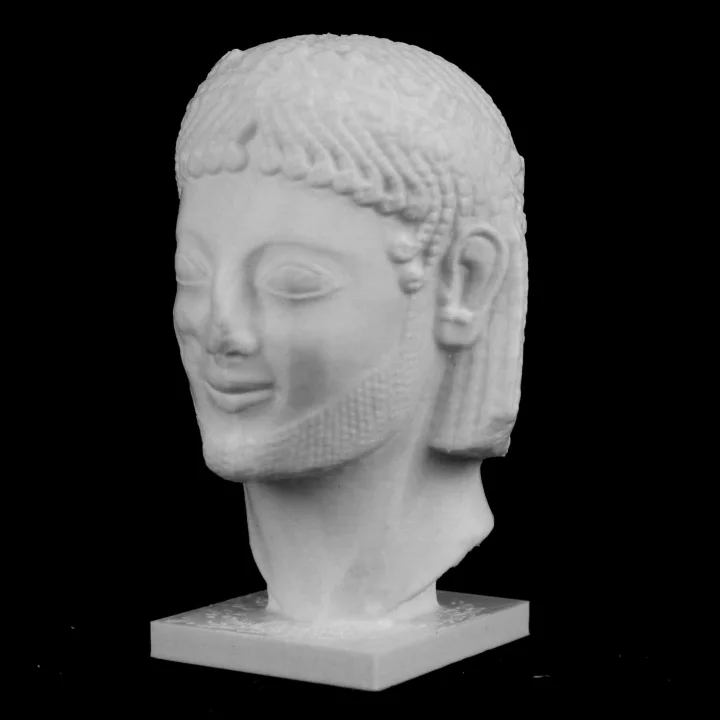
Head of The Rampin Rider at The Réunion des Musées Nationaux, Paris
- Type
- 3D Models
- Dimensions
- 3D
The Rampin Horseman is a masterpiece of Archaic art, which blends Attic seriousness with the rich decorative tradition of eastern Greece. The head, which is original, is placed on a mold taken from a fragmentary equestrian group in the Acropolis Museum in Athens. The identity of the horseman is uncertain. We appear to be in the presence of a hero or a member of the Athenian aristocracy-unless the crown of leaves that he wears is a victory prize awarded in one of the Panhellenic games. This male head, which was found on the Acropolis in 1877, was sculpted around 550 BC. It was purchased by Georges Rampin, who left it to the Louvre in 1896. Ten years earlier, a body of a horseman and fragments of a horse had been found on the Acropolis; they were excavated from a ditch that was dug to hold statues that were broken during the sack of Athens by the Persians in 480 BC. It was not until 1936 that the English archaeologist Humphry Payne connected this head with the equestrian group in the Acropolis Museum in Athens (molds of the group have been added to the Louvre's presentation of the head). The asymmetrical neck, which is unusual in sixth century BC sculpture, is explained by the fact that the group is thought to have comprised two horsemen forming a pair. The identity of the horseman is uncertain. For a long time, the hypothesis of a second horseman encouraged the notion that it was dedicated to Hippias and Hipparchus, the sons of Pisistratus, whose names predestined them to horseback riding. Horses (in Greek, hippos) were a privilege reserved for members of the aristocracy. The monument would have been erected after the return of the tyrant to Athens in 546 BC. It was thus supposed that the group was a depiction of Castor and Pollux-equestrian heroes frequently pictured on vases between 550 and 510 BC-without necessarily ruling out the Dioscuri or the Pisistratidae as subjects. An examination of the fragments has shown that they belonged to other horses, disproving…