GetAssetPack

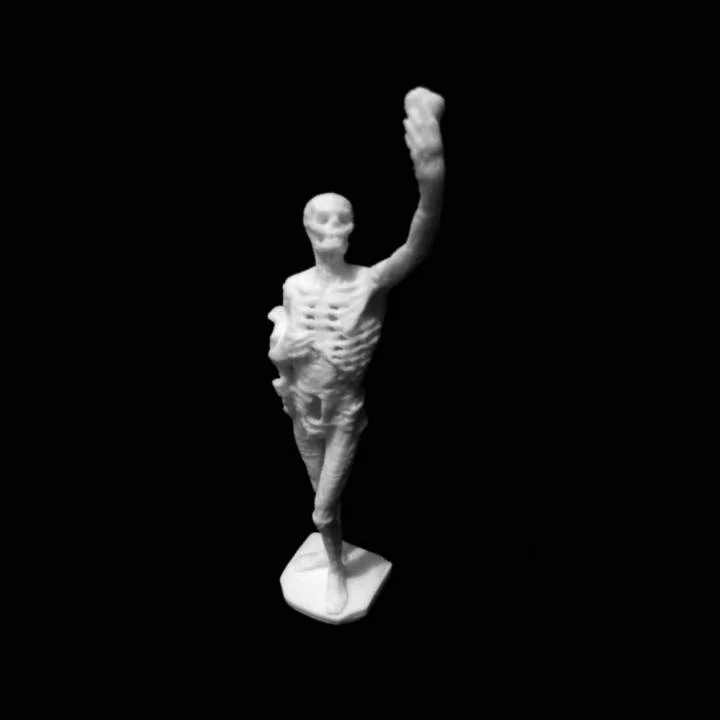
Le Transi de Rene de Chalon at The Musée des Monuments Francais, France
Le Transi de Rene de Chalon at The Musée des Monuments Francais, France
Type
3D Models
Dimensions
3D

In the section above dealing with the calvary we have made reference to Richier's work in the church of St Ėtienne in Bar-le-Duc. There is a second Richier work is this Bar-le-Duc church, a work known as the "Transi" as shown in the photograph above. It is a macabre work and an example of écorché. This sculpture was originally housed in the collegiate church of Saint-Maxe in Bar-le-Duc, which was abandoned in 1782. This work, also known as the "Death as a skeleton" or the "Squelette de Bar" is a memorial to Renė de Chalon, the brother-in-law of Duke Antoine of Lorraine. There is a cast of the work in the Musée barrois in Bar-le-Duc. The Meuse tourist office have produced a brochure covering the two works which opens with words by Bernard Noël, the French writer and poet "The spectator today, who so frequently hears of people being tortured to death and of death without salvation, can see this "Death as a skeleton" as a ghost that may well come back to haunt us, but what symbolism should be attributed to the heart?” The brochure then explains that Gilles de Trèves, the Dean of Saint-Maxe’s Collegiate Church, had invited Ligier Richier to visit Bar in around 1540-1549 and to undertake extensive decorative work in the Chapel of the Princes. The work was completed in 1554. The brochure explains that Michel de Montaigne, who stayed in Bar in 1580, much admired the architecture and sculpture in polished stone and terra cotta, which must have been impressive at the time, but of which only a few fragments remain. Saint-Maxe’s Collegiate Church was demolished during the French Revolution and what was left of Ligier’s work is now in Saint Etienne’s Church. Around 1550, Richier sculpted one of the most famous funerary monuments of the French Renaissance, "Death of a Skeleton". The brochure explains that the work is a memorial to the heart of René de Chalon, the Duke Antoine of Lorraine’s brother-in-law. The figure holds de Chalon's heart up to heaven whilst the other hand…

Available on

Search by image

Upload a reference to find previews with similar colors, contrast, and detail.

Le Transi de Rene de Chalon at The Musée des Monuments Francais, France

Le Transi de Rene de Chalon at The Musée des Monuments Francais, France
MyMiniFactory
3D Models
License not indexed
  • i Check the terms on the original listing.
Show full terms

In the section above dealing with the calvary we have made reference to Richier's work in the church of St Ėtienne in Bar-le-Duc. There is a second Richier work is this Bar-le-Duc church, a work known as the "Transi" as shown in the photograph above. It is a macabre work and an example of écorché. This sculpture was originally housed in the collegiate church of Saint-Maxe in Bar-le-Duc, which was abandoned in 1782. This work, also known as the "Death as a skeleton" or the "Squelette de Bar" is a memorial to Renė de Chalon, the brother-in-law of Duke Antoine of Lorraine. There is a cast of the work in the Musée barrois in Bar-le-Duc. The Meuse tourist office have produced a brochure covering the two works which opens with words by Bernard Noël, the French writer and poet "The spectator today, who so frequently hears of people being tortured to death and of death without salvation, can see this "Death as a skeleton" as a ghost that may well come back to haunt us, but what symbolism should be attributed to the heart?” The brochure then explains that Gilles de Trèves, the Dean of Saint-Maxe’s Collegiate Church, had invited Ligier Richier to visit Bar in around 1540-1549 and to undertake extensive decorative work in the Chapel of the Princes. The work was completed in 1554. The brochure explains that Michel de Montaigne, who stayed in Bar in 1580, much admired the architecture and sculpture in polished stone and terra cotta, which must have been impressive at the time, but of which only a few fragments remain. Saint-Maxe’s Collegiate Church was demolished during the French Revolution and what was left of Ligier’s work is now in Saint Etienne’s Church. Around 1550, Richier sculpted one of the most famous funerary monuments of the French Renaissance, "Death of a Skeleton". The brochure explains that the work is a memorial to the heart of René de Chalon, the Duke Antoine of Lorraine’s brother-in-law. The figure holds de Chalon's heart up to heaven whilst the other hand rests on its chest. On the Calvary the brochure reads "Prior to Ligier Richier, many of Lorraine sculptors’ workshops had already produced versions of the bloodier aspects of Christ’s Passion, a popular religious theme in Lorraine at the time". The work is 1.75 metres high. Originally this work was located in the collegiate church of St Maxe and was placed over a burial vault which held the hearts of Duke Antoine de Lorraine, René de Chalon and other family members. According to Paul Denis t

View original listing