GetAssetPack

Flame-style deep bowl at the UEA, Norwich
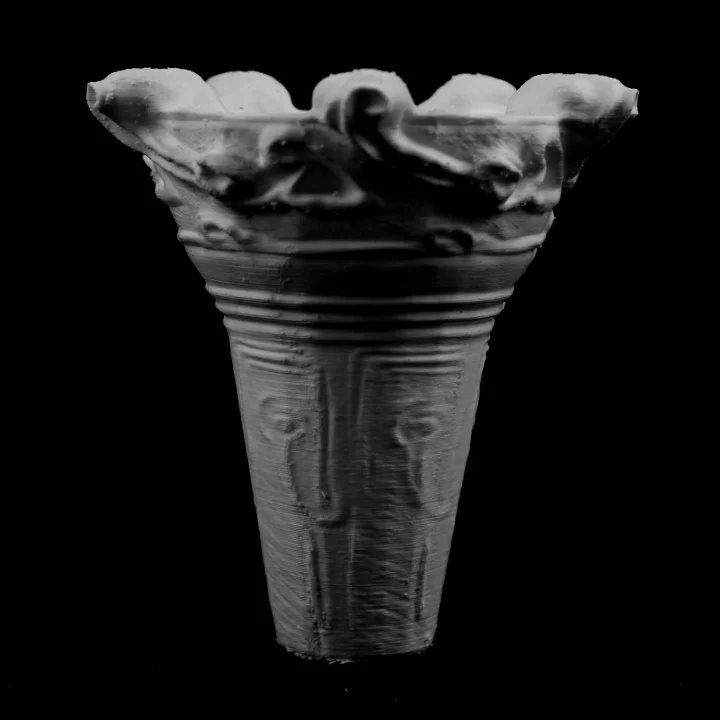
Flame-style deep bowl at the UEA, Norwich
Type
3D Models
Dimensions
3D
Setting
Asian

Deep coil-built bowls date to the earliest Jomon phases. During the Middle Jomon phase a number of elaborate types developed in various parts of Japan, notably these flame-style pots. In some examples the 'flames' are pierced and as high as the body of the pot itself, but in this fine and well preserved bowl the rim decoration is more restrained. It was formed by cutting and incising slabs of clay to form deep spirals and swirls. Bowls of this kind are likely to have had a ritual use; the presence of carbonised deposits in some examples suggests that this may have included their functioning as cooking pots. Human bones have also been found interred in them, evidence of secondary burial practices. This object is part of "Scan The World". Scan the World is a non-profit initiative introduced by MyMiniFactory, through which we are creating a digital archive of fully 3D printable sculptures, artworks and landmarks from across the globe for the public to access for free. Scan the World is an open source, community effort, if you have interesting items around you and would like to contribute, email stw@myminifactory.com to find out how you can help. | Download free and paid 3D printable STL files

Available on

Search by image

Upload a reference to find previews with similar colors, contrast, and detail.

Flame-style deep bowl at the UEA, Norwich

Flame-style deep bowl at the UEA, Norwich
MyMiniFactory
3D Models
License not indexed
  • i Check the terms on the original listing.
Show full terms

Deep coil-built bowls date to the earliest Jomon phases. During the Middle Jomon phase a number of elaborate types developed in various parts of Japan, notably these flame-style pots. In some examples the 'flames' are pierced and as high as the body of the pot itself, but in this fine and well preserved bowl the rim decoration is more restrained. It was formed by cutting and incising slabs of clay to form deep spirals and swirls. Bowls of this kind are likely to have had a ritual use; the presence of carbonised deposits in some examples suggests that this may have included their functioning as cooking pots. Human bones have also been found interred in them, evidence of secondary burial practices.   This object is part of "Scan The World". Scan the World is a non-profit initiative introduced by MyMiniFactory, through which we are creating a digital archive of fully 3D printable sculptures, artworks and landmarks from across the globe for the public to access for free. Scan the World is an open source, community effort, if you have interesting items around you and would like to contribute, email stw@myminifactory.com to find out how you can help. | Download free and paid 3D printable STL files

View original listing