 GetAssetPack
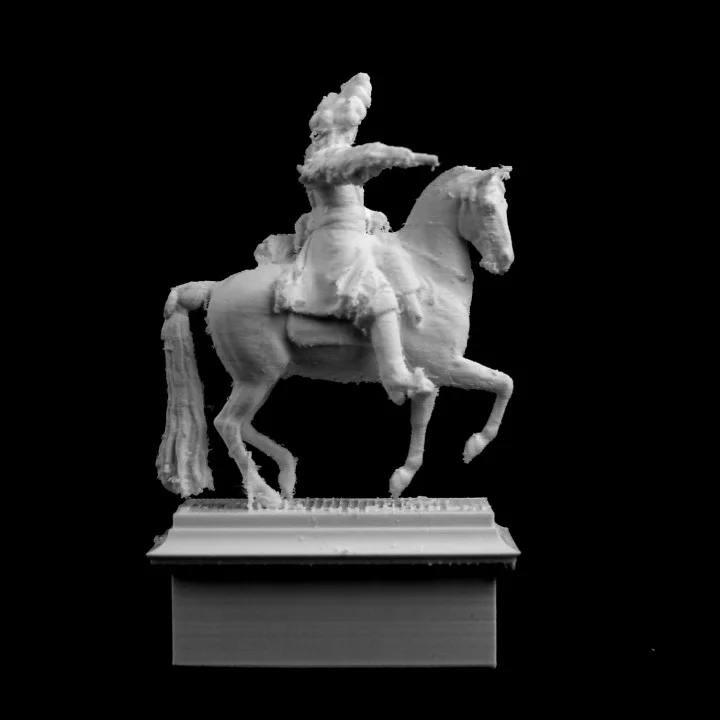
Louis XIV of France at the Louvre, Paris
- Type
- 3D Models
- Dimensions
- 3D
- Setting
- Medieval
A reduced bronze model of Louis XIV on horseback, based on the equestrian statue once displayed in Place Vendôme.
In 1685, Louis XIV's war minister, the marquis de Louvois, adopted a group of speculators' idea of creating a new square in Paris. The square was created by Jules Hardouin-Mansart, and in its center stood a bronze equestrian statue of Louis XIV by Girardon standing seven meters high (around seventeen meters with the pedestal). This square was later to become the Place Vendôme. In 1792, Girardon's sculpture was destroyed. The piece in the Louvre is the only signed reduced version of the work. The context of the commission This bronze work is a reduced version of the equestrian statue of Louis XIV that stood in the Place Louis-le-Grand (today's Place Vendôme).To please Louis XIV, the Duc de La Feuillade had proposed the erection of a monumental full-scale statue of the king, commissioned from the sculptor Martin Desjardins. To provide a setting for the work, he redeveloped the Place des Victoires, which celebrated the king's victories in the Dutch war ending in the peace treaty of Nijmegen (1679).This initiative was followed up in 1685 by the Marquis de Louvois, the war minister under Louis XIV, who persuaded the king to create a "Place des Conquêtes" on the site of the Hôtel de Vendôme. Jules Hardouin-Mansart, the architect behind the Place des Victoires and who had just designed the Château and Orangerie at Versailles, was responsible for the design of this square. To surpass the rival square in magnificence, an equestrian statue was to be erected, commissioned from an even more prestigious sculptor than Desjardins: François Girardon. The model Girardon worked on the model from 1685 to 1687. He depicted Louis XIV as a Roman emperor wearing a voluminous contemporary curly wig. The king sits astride his mount with neither saddle nor stirrups, the horse being shown in the passant (walking) position with right foreleg raised. Girardon drew his inspiration from the ancient statue of Marcus Aurelius at the Capitol in Rome - a major reference in the field - but made his…