 GetAssetPack
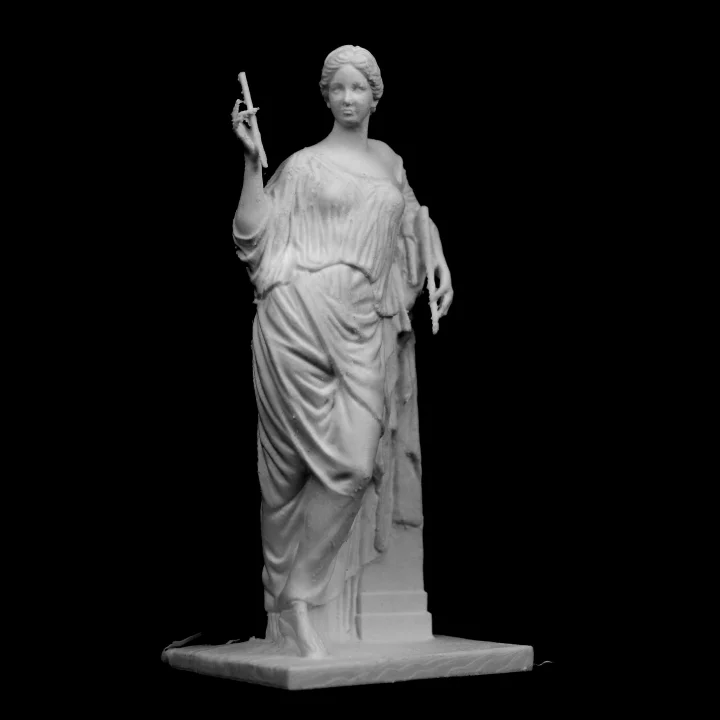
Aphrodite au Pilier at The Louvre, Paris
- Type
- 3D Models
- Dimensions
- 3D
Initially identified as Thalia, the muse of comedy, the statue was then taken for Euterpe, the muse of flute-playing, in the nineteenth century, before being identified as an ancient replica of an Aphrodite leaning against a pillar (probably Alcamenes' Aphrodite of the Gardens, sculpted at the end of the fifth century BC). The pose of the goddess, the handling of the drapery, and the openly sensual treatment of the female body are "mannerist" in style. The misadventures of Aphrodite Leaning Against a Pillar Formerly in the collection of Louis XIV, this statue has been subject to many interpretations over the centuries. It was first of all identified as a muse, because of the crow and the bay (or olive) branch carved in low-relief on the pillar, two symbols of the god Apollo, protector of the Muses. Some thought they recognized Thalia, muse of comedy, and imagined the young woman holding a grimacing mask in her right hand. In the nineteenth century, the statue was believed to represent Euterpe, muse of flute-playing, whose attribute is a double flute. It was only later in the same century that the work was identified as a classical replica of an Aphrodite leaning against a pillar, comparable to the decoration found on certain late fifth-century BC bronze reliefs (in particular, a plaque decorating a lamp-holder in the collection of the National Museum in Athens); this time, there could be no doubt about the identity of the figure, who is associated with Eros. A replica of Aphrodite of the Gardens attributed to Alcamenes The statue is very likely to be a reproduction of the famous Aphrodite of the Gardens made at the end of the fifth century BC by the Athenian sculptor Alcamenes, a contemporary of Phidias, and a follower and emulator of the latter. The original, described by Pausanias (Guide to Greece I, 19, 2), was in Athens. Wearing a chiton and a robe covering only the lower part of her body, the goddess leans on a pillar or a tree trunk with a distinct slouching…