GetAssetPack

Vulcan (or possibly Prometheus) chained to a rock
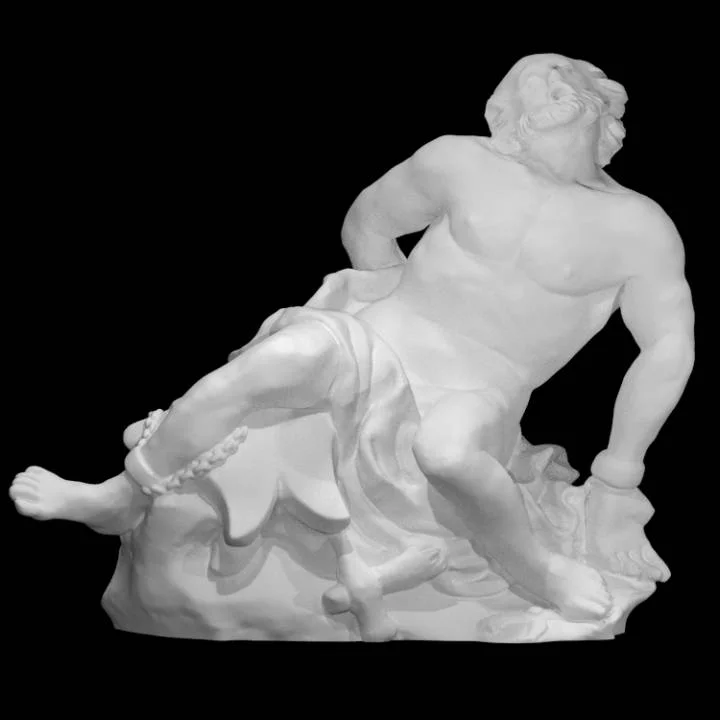
Vulcan (or possibly Prometheus) chained to a rock
Type
3D Models
Dimensions
3D

The figure is closely related to David's statue of St Bartholomew in the church of S. Maria di Carignano in Genoa, Italy. Malcolm Baker has suggested that it's one of the few free-standing sculptures of mythological figures to have been executed by a sculptor working in England in the first half of the 18th century'. Although traditionally thought to represent the mythical Prometheus, chained to a rock by the god Jupiter, the figure probably represents Vulcan. The diary of Sir Matthew Decker, who saw the piece in its original setting in 1728, provides an explanation of its symbolism. Placed on the landing half-way up the main staircase, the figure was intended to be accompanied by a further figure of William III, as part of an allegorical representation of how William's arrival in England and the Glorious Revolution of 1688 had averted a civil war. 'Vulcan is accordingly represented as chained, rather than fashioning the instruments of war.' Gallery location:Sculpture, Room 22, The Dorothy and Michael Hintze Galleries, case FS, shelf WS This object is part of "Scan The World". Scan the World is a non-profit initiative introduced by MyMiniFactory, through which we are creating a digital archive of fully 3D printable sculptures, artworks and landmarks from across the globe for the public to access for free. Scan the World is an open source, community effort, if you have interesting items around you and would like to contribute, email stw@myminifactory.com to find out how you can help.Courtesy of the Victoria and Albert Museum, London | Download free and paid 3D printable STL files

Available on

Search by image

Upload a reference to find previews with similar colors, contrast, and detail.

Vulcan (or possibly Prometheus) chained to a rock

Vulcan (or possibly Prometheus) chained to a rock
MyMiniFactory
3D Models
License not indexed
  • i Check the terms on the original listing.
Show full terms

The figure is closely related to David's statue of St Bartholomew in the church of S. Maria di Carignano in Genoa, Italy. Malcolm Baker has suggested that it's one of the few free-standing sculptures of mythological figures to have been executed by a sculptor working in England in the first half of the 18th century'. Although traditionally thought to represent the mythical Prometheus, chained to a rock by the god Jupiter, the figure probably represents Vulcan. The diary of Sir Matthew Decker, who saw the piece in its original setting in 1728, provides an explanation of its symbolism. Placed on the landing half-way up the main staircase, the figure was intended to be accompanied by a further figure of William III, as part of an allegorical representation of how William's arrival in England and the Glorious Revolution of 1688 had averted a civil war. 'Vulcan is accordingly represented as chained, rather than fashioning the instruments of war.'   Gallery location:Sculpture, Room 22, The Dorothy and Michael Hintze Galleries, case FS, shelf WS   This object is part of "Scan The World". Scan the World is a non-profit initiative introduced by MyMiniFactory, through which we are creating a digital archive of fully 3D printable sculptures, artworks and landmarks from across the globe for the public to access for free. Scan the World is an open source, community effort, if you have interesting items around you and would like to contribute, email stw@myminifactory.com to find out how you can help.Courtesy of the Victoria and Albert Museum, London | Download free and paid 3D printable STL files

View original listing