GetAssetPack

Viking Swords - type X

Viking Swords - type X
Type
3D Models
Dimensions
3D

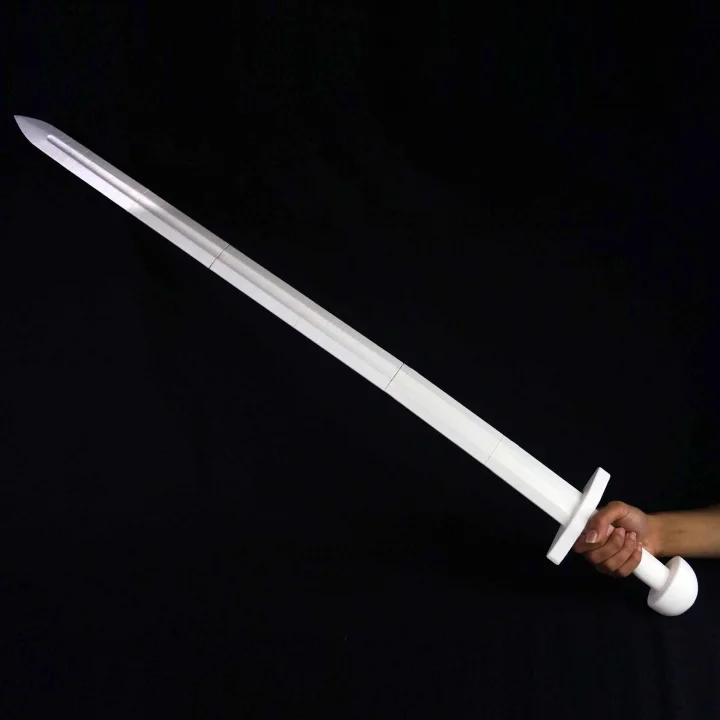
Oakeshott X describes the type of sword common in the late Viking age, remaining in use up to the 13th century. It features a broad and flat blade with an average length of 80 centimetres (2.6 ft) with a very wide and shallow fuller running almost the entire length of the blade but fading out just before the point (which is typically rounded). The grip has the same average length as earlier Viking swords of about 9 centimetres (3.5 in). The tang is usually very flat and broad, and tapers sharply towards the pommel. The cross or cross-guard is of square section, about 18–20 centimetres (7.1–7.9 in), tapering towards the tips,[clarification needed] in some rare cases slightly curved.[which?] The type X is narrower and longer than the typical Viking sword, representing a transitional type to the knightly sword of the High Middle Ages. Tenth century Norsemen referred to this type of sword as gaddhjalt (meaning spike hilt). The pommel usually takes an oval Brazil-nut form or a disk-shape. The inlaid ULFBERHT mark is characteristic of the type X sword. In 1981 Oakeshott introduced the a subtype Xa including swords with similar blades but narrower fuller, originally classified under type XI. | Download free and paid 3D printable STL files

Available on

Search by image

Upload a reference to find previews with similar colors, contrast, and detail.

Viking Swords - type X

Viking Swords - type X
MyMiniFactory
3D Models
License not indexed
  • i Check the terms on the original listing.
Show full terms

Oakeshott X describes the type of sword common in the late Viking age, remaining in use up to the 13th century. It features a broad and flat blade with an average length of 80 centimetres (2.6 ft) with a very wide and shallow fuller running almost the entire length of the blade but fading out just before the point (which is typically rounded). The grip has the same average length as earlier Viking swords of about 9 centimetres (3.5 in). The tang is usually very flat and broad, and tapers sharply towards the pommel. The cross or cross-guard is of square section, about 18–20 centimetres (7.1–7.9 in), tapering towards the tips,[clarification needed] in some rare cases slightly curved.[which?] The type X is narrower and longer than the typical Viking sword, representing a transitional type to the knightly sword of the High Middle Ages. Tenth century Norsemen referred to this type of sword as gaddhjalt (meaning spike hilt). The pommel usually takes an oval Brazil-nut form or a disk-shape. The inlaid ULFBERHT mark is characteristic of the type X sword. In 1981 Oakeshott introduced the a subtype Xa including swords with similar blades but narrower fuller, originally classified under type XI. | Download free and paid 3D printable STL files

View original listing