GetAssetPack

Aphrodite Doria-Pamphili at The Louvre, Paris
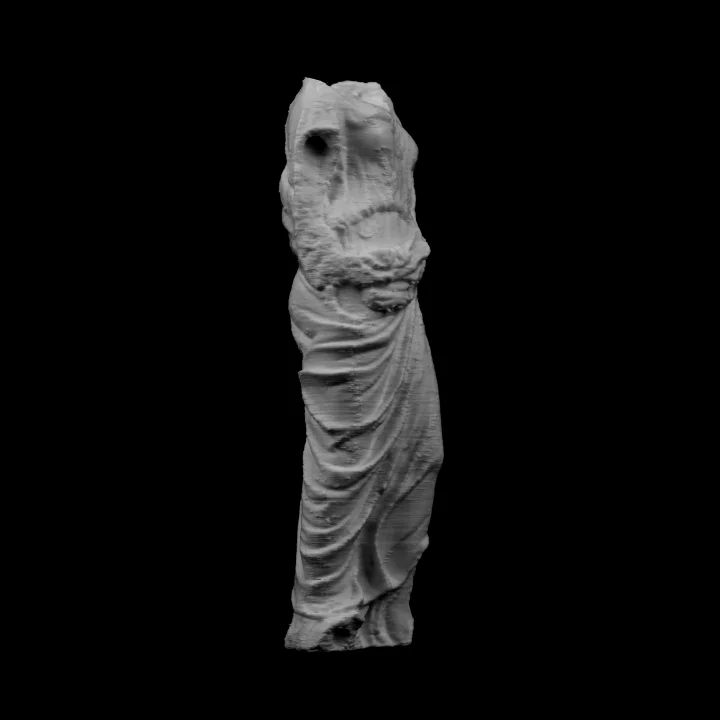
Aphrodite Doria-Pamphili at The Louvre, Paris
Type
3D Models
Dimensions
3D

This statue of Aphrodite is one of the finest copies of a classical sculpture dating from the last years of the 5th century BC. This type of statue owes its name to the most complete surviving example, now in the Doria Pamphili Palace in Rome. The question of the attribution of the original is still open. Some experts believe the statue to be a copy of the Aphrodite Urania by Phidias, while others identify it as a work by his contemporary Agorakritos of Paros. A copy of an original dating from the classical era In 1996 the Louvre purchased a remarkable marble statue that formerly stood in the grounds of Ombreval, the property of Stéphane Dervillé in Domont, Val d'Oise, near Paris. The work was produced using the acrolithic technique, the extremities-the head, nude right shoulder, arms, and feet-having been sculpted separately and added later, although the whole work is in marble. This effigy of Aphrodite is one of a series of copies of a Greek work dating from the classical era-more precisely, the last decades of the 5th century BC. The most complete example, now in the Doria-Pamphili Palace in Rome, has given its name to this style of statue in general. Works by the classical sculptor Polykleitos inspired the contrapposto position, which he invented in the mid-5th century BC. This position is defined by an asymmetrical pose, with the shoulders turned in the opposite direction to the hips, and with one leg slightly forward so that the weight of the body is on the other leg. Identifying the sculptor: Phidias or Agorakritos? The question of the sculptor's identity has given rise to much debate. The treatment of the drapery and the nude shoulder-a motif often used by sculptors to denote the sensuality of the goddess of love-would seem to link this Aphrodite to the semi-reclining Aphrodite on the eastern pediment of the Parthenon. The original on which this work is based is thus sometimes attributed to Phidias, who directed work on the architectural decor of the…

Available on

Search by image

Upload a reference to find previews with similar colors, contrast, and detail.

Aphrodite Doria-Pamphili at The Louvre, Paris

Aphrodite Doria-Pamphili at The Louvre, Paris
MyMiniFactory
3D Models
License not indexed
  • i Check the terms on the original listing.
Show full terms

This statue of Aphrodite is one of the finest copies of a classical sculpture dating from the last years of the 5th century BC. This type of statue owes its name to the most complete surviving example, now in the Doria Pamphili Palace in Rome. The question of the attribution of the original is still open. Some experts believe the statue to be a copy of the Aphrodite Urania by Phidias, while others identify it as a work by his contemporary Agorakritos of Paros. A copy of an original dating from the classical era In 1996 the Louvre purchased a remarkable marble statue that formerly stood in the grounds of Ombreval, the property of Stéphane Dervillé in Domont, Val d'Oise, near Paris. The work was produced using the acrolithic technique, the extremities-the head, nude right shoulder, arms, and feet-having been sculpted separately and added later, although the whole work is in marble. This effigy of Aphrodite is one of a series of copies of a Greek work dating from the classical era-more precisely, the last decades of the 5th century BC. The most complete example, now in the Doria-Pamphili Palace in Rome, has given its name to this style of statue in general. Works by the classical sculptor Polykleitos inspired the contrapposto position, which he invented in the mid-5th century BC. This position is defined by an asymmetrical pose, with the shoulders turned in the opposite direction to the hips, and with one leg slightly forward so that the weight of the body is on the other leg. Identifying the sculptor: Phidias or Agorakritos? The question of the sculptor's identity has given rise to much debate. The treatment of the drapery and the nude shoulder-a motif often used by sculptors to denote the sensuality of the goddess of love-would seem to link this Aphrodite to the semi-reclining Aphrodite on the eastern pediment of the Parthenon. The original on which this work is based is thus sometimes attributed to Phidias, who directed work on the architectural decor of the Parthenon between 447 and 432 BC. In this case, the original is identified as the Aphrodite Urania (the Heavenly Aphrodite) in Elis, described by Pausanias in the Periegesis (6.25.1), or the Aphrodite on the Agora in Athens (1.14.7). However, this attribution poses a number of difficulties. Some of the effects of the drapery go beyond the aesthetic canon of the Parthenon and are closer to works from the end of the 5th century BC. Likewise, none of the Doria-Pamphili-style copies includes the tortoi

View original listing