GetAssetPack

The Repentant Magdalene at The State Hermitage Museum, St Petersburg
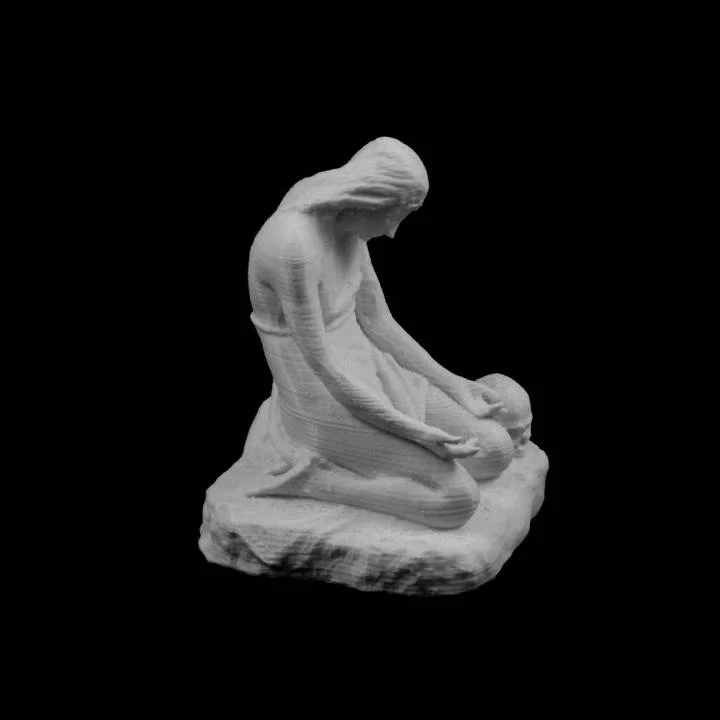
The Repentant Magdalene at The State Hermitage Museum, St Petersburg
Type
3D Models
Dimensions
3D

Antonio Canova (1757-1822), the great Neoclassical sculptor, left a truly prodigious body of work, much of it portraiture or mythological in subject matter or, not infrequently, as in Paolina Borghese as Venus Victorix andNapoleon as Mars the Peacemaker, a mixture of the two. Religious works by him are comparatively rare, though, the most celebrated being The Repentant Magdalene. The first version, completed for a private patron between 1794-6, is in the Museo di Sant’Agostino in Genoa, the second, dated 1809, is housed in St. Petersburg’s Hermitage Museum. Heralded as Canova’s greatest work at the time, indeed “the greatest work of modern times” according to the novelist Stendhal, the sculpture obviously struck a chord with contemporary audiences. Though undoubtedly a very moving work of art, a modern viewer might be tempted to ask why such gushing praise? The subject was commissioned by a Venetian churchman, Guiseppi Pruili, presumably for devotional purposes. In 1798 the work was sold and passed into the hands of Giovanni Sommariva, a flamboyant Italian politician who enjoyed a close relationship with Napoleon. Having made the purchase, he converted a room in his Parisian house specifically to accommodate the sculpture, “half chapel, half boudoir, furnished in violet and lit by an alabaster lamp hanging from the cupola,” as one contemporary, Francis Haskell, described it. In 1808, Sommariva had the sculpture exhibited at the Salon in the Musée Napoleon, today’s Louvre, where it created a 'miraculous' effect on all who saw it. A large part of its huge appeal, which bordered on mania, must have been due to the political and religious sensitivities of the time. In terms of the latter, since the Revolution of 1789, France had effectively been a de-christianized state: church land was confiscated, religious images destroyed and tens of thousands of priests forced to abdicate. In 1801, however, Napoleon as First Consul signed a Concordat (an agreement between the Pope…

Available on

Search by image

Upload a reference to find previews with similar colors, contrast, and detail.

The Repentant Magdalene at The State Hermitage Museum, St Petersburg

The Repentant Magdalene at The State Hermitage Museum, St Petersburg
MyMiniFactory
3D Models
License not indexed
  • i Check the terms on the original listing.
Show full terms

Antonio Canova (1757-1822), the great Neoclassical sculptor, left a truly prodigious body of work, much of it portraiture or mythological in subject matter or, not infrequently, as in Paolina Borghese as Venus Victorix andNapoleon as Mars the Peacemaker, a mixture of the two. Religious works by him are comparatively rare, though, the most celebrated being The Repentant Magdalene. The first version, completed for a private patron between 1794-6, is in the Museo di Sant’Agostino in Genoa, the second, dated 1809, is housed in St. Petersburg’s Hermitage Museum. Heralded as Canova’s greatest work at the time, indeed “the greatest work of modern times” according to the novelist Stendhal, the sculpture obviously struck a chord with contemporary audiences. Though undoubtedly a very moving work of art, a modern viewer might be tempted to ask why such gushing praise? The subject was commissioned by a Venetian churchman, Guiseppi Pruili, presumably for devotional purposes. In 1798 the work was sold and passed into the hands of Giovanni Sommariva, a flamboyant Italian politician who enjoyed a close relationship with Napoleon. Having made the purchase, he converted a room in his Parisian house specifically to accommodate the sculpture, “half chapel, half boudoir, furnished in violet and lit by an alabaster lamp hanging from the cupola,” as one contemporary, Francis Haskell, described it. In 1808, Sommariva had the sculpture exhibited at the Salon in the Musée Napoleon, today’s Louvre, where it created a 'miraculous' effect on all who saw it. A large part of its huge appeal, which bordered on mania, must have been due to the political and religious sensitivities of the time. In terms of the latter, since the Revolution of 1789, France had effectively been a de-christianized state: church land was confiscated, religious images destroyed and tens of thousands of priests forced to abdicate. In 1801, however, Napoleon as First Consul signed a Concordat (an agreement between the Pope and a sovereign state on religious matters), which largely, though not wholly, restored the Catholic Churchs’s pre-Revolution status. That a contemporary religious work by so celebrated a sculptor was being shown in a Salon organized by the French state would have served as a powerful visual reminder of the new role of religion in public affairs. Just as important, one suspects, is the figure herself, Mary Magdalene mourning the loss of her beloved Jesus. It is a stark and striking image of g

View original listing