 GetAssetPack
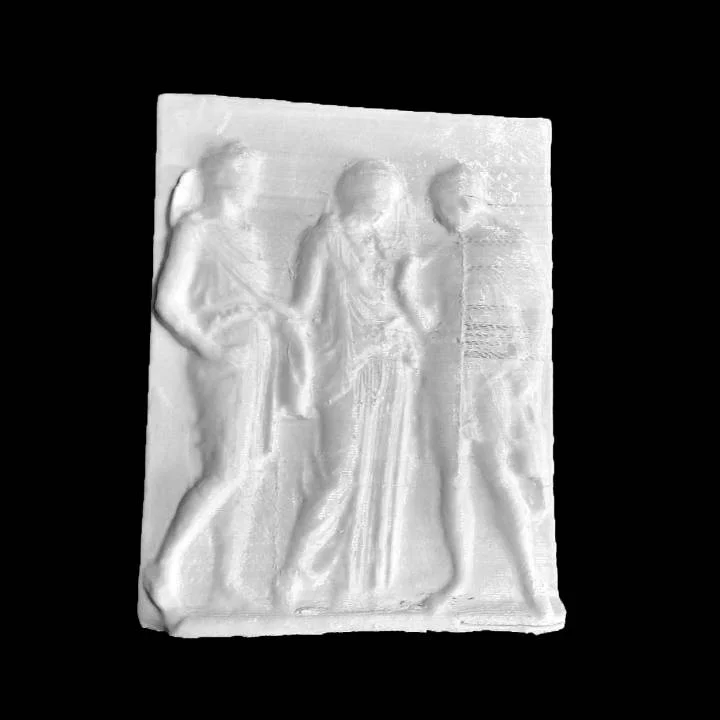
Orpheus Relief with Hermes, Eurydice, and Orpheus
- Type
- 3D Models
- Dimensions
- 3D
The relief belongs to a class of so-called "three figure reliefs" in Classical Greek style (5 B.C.). Most of these, however, have been found at sites in Italy, and thus may have been produced by Greek artists for an Italian art market, ca. 100 BCE-100 CE. Five full copies and two partial ones of the Orpheus panel are known; our cast is of the relief in the Naples Archaeological Museum, Italy, either an original of the 1st c. BCE/CE or a copy of a Greek original of ca. 420 BCE. On the Naples relief, the name of each figure is inscribed at the top of the scene in Greek (Orpheus is written backwards, or retrograde). This cast adapts the marble relief in Naples -- Orpheus's foot is slightly angled. One theory, now discredited, is that the original of this relief once decorated the Altar of the Twelve Gods in the marketplace (Agora) at Athens. Our panel shows Orpheus, Eurydice, and Hermes (the Roman Mercury). According to myth, Orpheus was a son of Apollo and a famous singer who lived in Thrace in northern Greece - his song could charm human beings, wild animals, and even inanimate objects like trees and rocks. His wife, Eurydice, was playing with her companions when she stepped on a serpent that bit her: she died. Hermes, conductor of dead souls to the Underworld, led her "shade" into the realm of Hades and Persephone. Orpheus refused to accept the loss, and followed the shade of his wife. Persuaded by his music, Hades agreed to return Eurydice to the land of the living, as long as Orpheus, while leading her spirit back to the upper world, did not look back at her. At the threshold to the upper world, however, Orpheus hesitated and turned - Eurydice was forced to die a second time. In sorrow, the singer turned away from the love of women and became exclusively homosexual. Infuriated, the wild women (maenads) of Thrace tore him to pieces and threw his head in the river; it floated downstream and out to sea, still singing. Hermes stands on the viewer's left, and can be…