GetAssetPack

Leda and The Cygnet at The Louvre, Paris
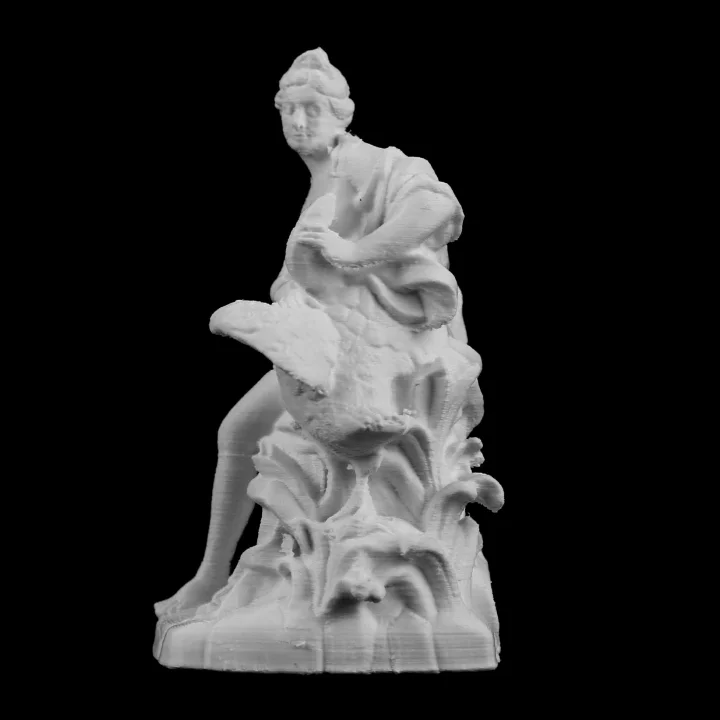
Leda and The Cygnet at The Louvre, Paris
Type
3D Models
Dimensions
3D

Leda, Queen of Sparta, was seduced by Jupiter in the form of a swan. Jean Thierry's Academy diploma piece in 1717 was an unusual one: although this type of subject had often been treated since the 16th century, tragic themes were generally preferred for admission to the Academy. The story of Leda corresponded to the light and libertine style that Thierry promulgated at the Spanish court of King Philip V. The god Jupiter fell in love with Leda, the mortal queen of Sparta. He came to her in the form of a swan, and seduced her while she was bathing in the river. This story is told by Ovid in his Metamorphoses - an early 1st-century work recounting the transformations of gods and mortals into plants or animals, which was a primary source of artistic inspiration from the Renaissance onward. The painter Antoine Coypel, director of the Royal Academy of Painting and Sculpture, imposed this theme on the sculptor Thierry in 1714 for his diploma piece. The bas-reliefs which had previously been required for Academy admission were replaced in the 18th century by statuettes sculpted in the round. The majority of pieces had tragic, violent, themes, such as Guillaume I Coustou's Hercules at the Stake (1704, in the Louvre), François Dumont's Titan (1712, in the Louvre), René Charpentier's Death of Meleager(1713, in the Louvre), or Jean-Baptiste Lemoyne's Death of Hippoytus (1715, in the Louvre). Thierry's Leda, on the other hand, comes from a rarer romantic mythology. Leda was a recurrent motif in erotic art from the Italian Renaissance, treated by artists such as Da Vinci and Michelangelo. Thierry's approach to the theme has voluptuous elegance and grace. Leda's pose (sitting with one leg bent behind her, one arm across her body, and her head in profile) was inspired by the Nymph with a Quiver and Nymph with a Dove (in the Louvre) by Coustou, Thierry's master at Versailles. In this work, however, the contrapposto is accentuated, and the attitude more lascivious. Leda's body is…

Available on

Search by image

Upload a reference to find previews with similar colors, contrast, and detail.

Leda and The Cygnet at The Louvre, Paris

Leda and The Cygnet at The Louvre, Paris
MyMiniFactory
3D Models
License not indexed
  • i Check the terms on the original listing.
Show full terms

Leda, Queen of Sparta, was seduced by Jupiter in the form of a swan. Jean Thierry's Academy diploma piece in 1717 was an unusual one: although this type of subject had often been treated since the 16th century, tragic themes were generally preferred for admission to the Academy. The story of Leda corresponded to the light and libertine style that Thierry promulgated at the Spanish court of King Philip V. The god Jupiter fell in love with Leda, the mortal queen of Sparta. He came to her in the form of a swan, and seduced her while she was bathing in the river. This story is told by Ovid in his Metamorphoses - an early 1st-century work recounting the transformations of gods and mortals into plants or animals, which was a primary source of artistic inspiration from the Renaissance onward. The painter Antoine Coypel, director of the Royal Academy of Painting and Sculpture, imposed this theme on the sculptor Thierry in 1714 for his diploma piece. The bas-reliefs which had previously been required for Academy admission were replaced in the 18th century by statuettes sculpted in the round. The majority of pieces had tragic, violent, themes, such as Guillaume I Coustou's Hercules at the Stake (1704, in the Louvre), François Dumont's Titan (1712, in the Louvre), René Charpentier's Death of Meleager(1713, in the Louvre), or Jean-Baptiste Lemoyne's Death of Hippoytus (1715, in the Louvre). Thierry's Leda, on the other hand, comes from a rarer romantic mythology. Leda was a recurrent motif in erotic art from the Italian Renaissance, treated by artists such as Da Vinci and Michelangelo. Thierry's approach to the theme has voluptuous elegance and grace. Leda's pose (sitting with one leg bent behind her, one arm across her body, and her head in profile) was inspired by the Nymph with a Quiver and Nymph with a Dove (in the Louvre) by Coustou, Thierry's master at Versailles. In this work, however, the contrapposto is accentuated, and the attitude more lascivious. Leda's body is brought to life by the upward movement of the swan that envelops her with its wings, its webbed foot on her left thigh; she is turning to the swan, her right hand on its shoulder, her left caressing its neck. The protagonists are gazing into each other's eyes with obvious desire. The spiraling forms intertwine in a swirling shape that confers a multitude of viewpoints to the group. The sculptor played with textures too, using the ridges on the swan's feathers, Leda's braided hair, and the grooves

View original listing