GetAssetPack

Bust of Caracalla at The Réunion des Musées Nationaux, Paris
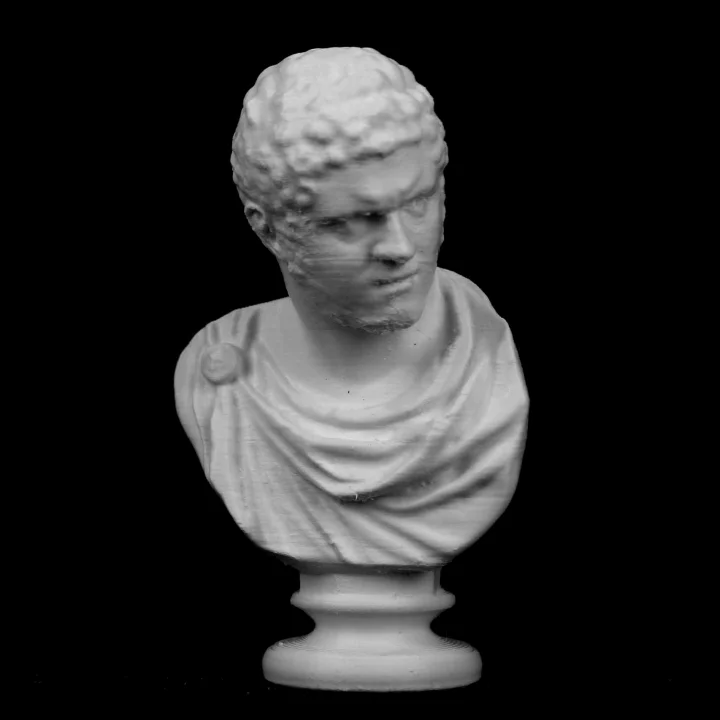
Bust of Caracalla at The Réunion des Musées Nationaux, Paris
Type
3D Models
Dimensions
3D

This bust with its determined expression is a portrait of Emperor Caracalla (AD 211-217). It is an expression of both the prince's psychology and his politics, and testifies to the importance of the military side of political life in the early third century AD. The vigorous modeling, worlds away from the baroque effects of the Antonine period, is a prelude to the more simplified portraits created in the second generation of the Several dynasty. The emperor Caracalla is here depicted in a bust, wearing a breastplate over which is draped the "paludamentum," a distinctive sign of a military leader. The head is slightly turned to the right. The hair is arranged in short, tight curls on the emperor's large round skull. The determined look finds expression in the contracted muscles of the forehead, creating two horizontal lines, and the tight mouth marked by lines in the corners. The gaze from beneath the shadow of his prominent brow adds to his intense concentration, as does the firmly drawn mouth and the tight jaw. Like his father Septimus Severus, who reigned from AD 193-210, Caracalla was a military emperor. At a time when the borders of the Roman Empire were threatened and a renewed policy of conquest was underway, the army once again played an central role in the exercise of power - it was essential for an emperor to have its support. By adopting a military-style beard and short hair, as well as wearing the breastplate draped with the "paludamentum," Caracalla allies himself with his soldiers. In addition, an image of the emperor as a soldier with a rough, almost malevolent, expression represented a break with the image of the noble, just prince that was traditionally conveyed by such official art, particularly in the portraits of Marcus Aurelius. Caracalla took great pains to give himself a fearsome appearance, staring down all challengers. This type of portrait is known from other images, the so-called "Tivoli" portraits, named after the place where one of them…

Available on

Search by image

Upload a reference to find previews with similar colors, contrast, and detail.

Bust of Caracalla at The Réunion des Musées Nationaux, Paris

Bust of Caracalla at The Réunion des Musées Nationaux, Paris
MyMiniFactory
3D Models
License not indexed
  • i Check the terms on the original listing.
Show full terms

This bust with its determined expression is a portrait of Emperor Caracalla (AD 211-217). It is an expression of both the prince's psychology and his politics, and testifies to the importance of the military side of political life in the early third century AD. The vigorous modeling, worlds away from the baroque effects of the Antonine period, is a prelude to the more simplified portraits created in the second generation of the Several dynasty.  The emperor Caracalla is here depicted in a bust, wearing a breastplate over which is draped the "paludamentum," a distinctive sign of a military leader. The head is slightly turned to the right. The hair is arranged in short, tight curls on the emperor's large round skull. The determined look finds expression in the contracted muscles of the forehead, creating two horizontal lines, and the tight mouth marked by lines in the corners. The gaze from beneath the shadow of his prominent brow adds to his intense concentration, as does the firmly drawn mouth and the tight jaw. Like his father Septimus Severus, who reigned from AD 193-210, Caracalla was a military emperor. At a time when the borders of the Roman Empire were threatened and a renewed policy of conquest was underway, the army once again played an central role in the exercise of power - it was essential for an emperor to have its support. By adopting a military-style beard and short hair, as well as wearing the breastplate draped with the "paludamentum," Caracalla allies himself with his soldiers. In addition, an image of the emperor as a soldier with a rough, almost malevolent, expression represented a break with the image of the noble, just prince that was traditionally conveyed by such official art, particularly in the portraits of Marcus Aurelius. Caracalla took great pains to give himself a fearsome appearance, staring down all challengers. This type of portrait is known from other images, the so-called "Tivoli" portraits, named after the place where one of them was found. In these, the princely features are easily recognizable, but they lack the exaggerated contraction of the forehead and contorted neck that characterize the so-called "Farnese-type" portraits from AD 212-215 - a time when Caracalla had his brother and co-regent Geta assassinated and began to rule the Empire alone. The image we have of Caracalla is that of a brutal dictator, so this gentler representation has led some to think that this is a portrait from early in his reign. This hypo

View original listing