GetAssetPack

Alexander the Great at The National Museum of Copenhagen, Denmark
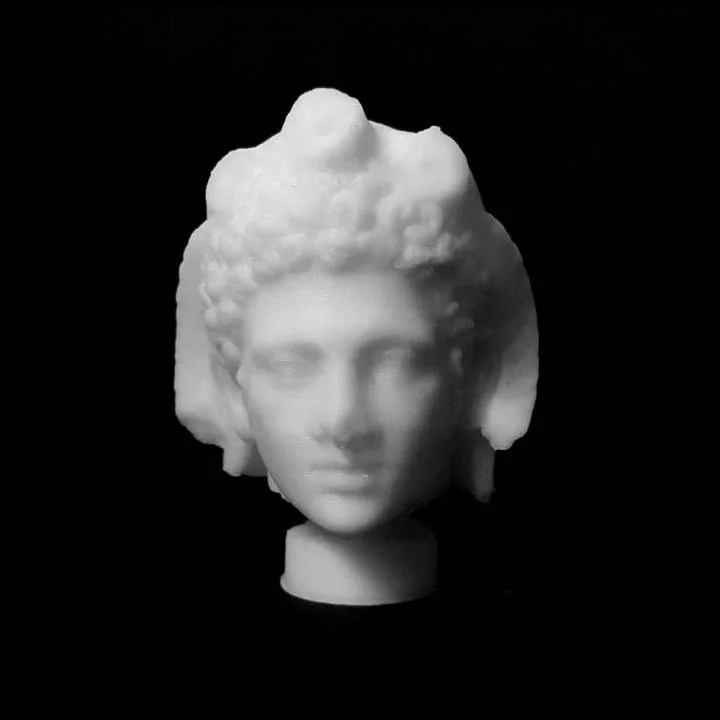
Alexander the Great at The National Museum of Copenhagen, Denmark
Type
3D Models
Dimensions
3D

Alexander the Great, marble, from Carthage or Utica in Tunisia, 150-250 AD, National museum (Copenhagen, Denmark). Made with Memento Beta. Alexander the Great as a god with ram´s horns and a elephant´s skin over the back of his head. Roman copy of Greek original. The worship of Ammon was introduced into Greece at an early period, probably through the medium of the Greek colony in Cyrene, which must have formed a connection with the great oracle of Ammon in the Oasis soon after its establishment. Ammon had a temple and a statue, the gift of Pindar, at Thebes, and another at Sparta, the inhabitants of which, as Pausanias says, consulted the oracle of Ammon in Libya from early times more than the other Greeks. At Aphytis, Chalcidice, Ammon was worshipped, from the time of Lysander, as zealously as in Ammonium. Pindar the poet honoured the god with a hymn. At Megalopolis the god was represented with the head of a ram (Paus. viii.32 § 1), and the Greeks of Cyrenaica dedicated at Delphi a chariot with a statue of Ammon. Such was its reputation among the Classical Greeks that Alexander the Great journeyed there after the battle of Issus and during his occupation of Egypt, where he was declared the son of Amun by the oracle. Alexander thereafter considered himself divine. Even during this occupation, Amun, identified by these Greeks as a form of Zeus, continued to be the principal local deity of Thebes. This object is part of "Scan The World". Scan the World is a non-profit initiative introduced by MyMiniFactory, through which we are creating a digital archive of fully 3D printable sculptures, artworks and landmarks from across the globe for the public to access for free. Scan the World is an open source, community effort, if you have interesting items around you and would like to contribute, email stw@myminifactory.com to find out how you can help.Scanned : Photogrammetry (Processed using Agisoft PhotoScan) | Download free and paid 3D printable STL files

Available on

Search by image

Upload a reference to find previews with similar colors, contrast, and detail.

Alexander the Great at The National Museum of Copenhagen, Denmark

Alexander the Great at The National Museum of Copenhagen, Denmark
MyMiniFactory
3D Models
License not indexed
  • i Check the terms on the original listing.
Show full terms

Alexander the Great, marble, from Carthage or Utica in Tunisia, 150-250 AD, National museum (Copenhagen, Denmark). Made with Memento Beta. Alexander the Great as a god with ram´s horns and a elephant´s skin over the back of his head. Roman copy of Greek original. The worship of Ammon was introduced into Greece at an early period, probably through the medium of the Greek colony in Cyrene, which must have formed a connection with the great oracle of Ammon in the Oasis soon after its establishment. Ammon had a temple and a statue, the gift of Pindar, at Thebes, and another at Sparta, the inhabitants of which, as Pausanias says, consulted the oracle of Ammon in Libya from early times more than the other Greeks. At Aphytis, Chalcidice, Ammon was worshipped, from the time of Lysander, as zealously as in Ammonium. Pindar the poet honoured the god with a hymn. At Megalopolis the god was represented with the head of a ram (Paus. viii.32 § 1), and the Greeks of Cyrenaica dedicated at Delphi a chariot with a statue of Ammon. Such was its reputation among the Classical Greeks that Alexander the Great journeyed there after the battle of Issus and during his occupation of Egypt, where he was declared the son of Amun by the oracle. Alexander thereafter considered himself divine. Even during this occupation, Amun, identified by these Greeks as a form of Zeus, continued to be the principal local deity of Thebes.   This object is part of "Scan The World". Scan the World is a non-profit initiative introduced by MyMiniFactory, through which we are creating a digital archive of fully 3D printable sculptures, artworks and landmarks from across the globe for the public to access for free. Scan the World is an open source, community effort, if you have interesting items around you and would like to contribute, email stw@myminifactory.com to find out how you can help.Scanned : Photogrammetry (Processed using Agisoft PhotoScan) | Download free and paid 3D printable STL files

View original listing