 GetAssetPack
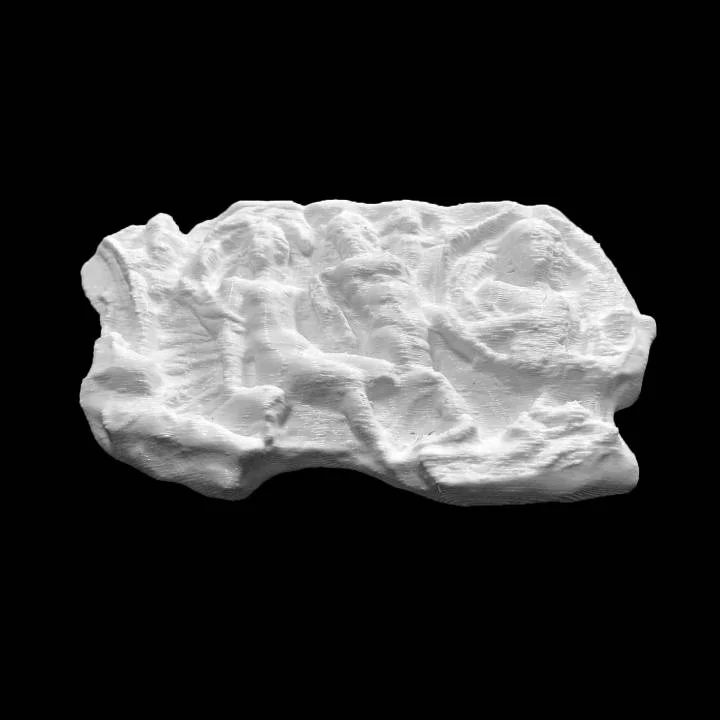
Fragment of Sarcophagus with a Sea-Centaur and the Dead
- Type
- 3D Models
- Dimensions
- 3D
Until the 2nd century AD the Romans followed the Greek and Etruscan practice of cremating their dead. The ashes were placed in a funerary or cinerary urn. The urns were frequently sculptured and had a stylized representation of the deceased on the lid. This practice was to continue until the end of the 1st century AD. For the wealthier families the urn might be placed in an altar and a sculptured tombstone might be commissioned; these acts were to memorialize the dead. From the 2nd century burials became more popular and by the 3rd century AD it was the standard practice. The poor were buried in cemeteries outside the town or city limits to avoid pollution within the town or city; the wealthy were also buried in the same cemeteries but often in elaborate tombs or sarcophagi within them. (Sarcophagus is from the Greek ‘sarxsark’ meaning ‘flesh’ and ‘sarkophagos’ meaning ‘flesh eating’). Most sarcophagi in Rome were placed against a wall or niche in these tombs or mausolea; therefore they were usually only decorated on the front and the two short sides. 2 nd c BC cinerary urn with scene of battle between centaurs and Greeks, now Perugia, Umbria (left) & 1st c AD tombstone of Roman legionnaire, Mainz, Germany (right) For the wealthy, carved sarcophagi were characteristic. These were usually of marble or, less frequently, of limestone and were frequently elaborately carved with scenes from Greek mythology reflecting the taste of upper class Romans for Greek culture. Other decorative themes illustrated aspects of the deceased’s personal and professional life and included battle and hunting scenes or biographical events from 2 the life of the deceased. A large number were decorated with garlands of flowers, foliage or fruits. 2nd c sarcophagus from Ostia Antico – Centauromachy 2nd c sarcophagus from Ostia Antico – Death of Hector The main production centres were in Rome and Northern Italy during the 2nd century and early 3rd century AD. The raw material such as marble…