GetAssetPack

Pheme Holding Pegasus at The Réunion des Musées Nationaux, Paris
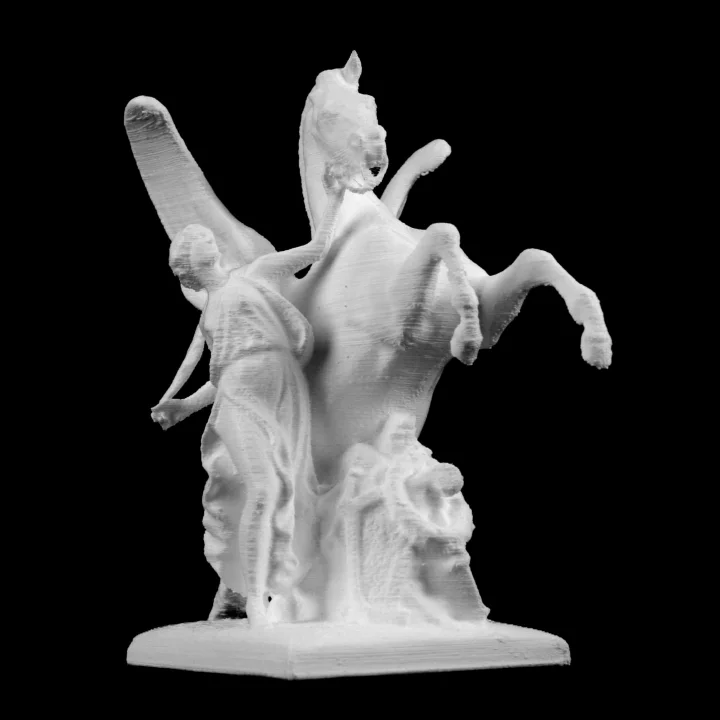
Pheme Holding Pegasus at The Réunion des Musées Nationaux, Paris
Type
3D Models
Dimensions
3D

This striking group-of-two sculpture was originally carved out of marble by French sculptor Eugène-Louis Lequesne (15 February 1815 – 3 June 1887) in 1865. The piece, titled Renommée Retenant Pégase (Pheme Holding Pegasus) depicts the Greek personification of fame and renown, leading the Greek mythological horse Pegasus. Pheme (fame) was the daughter or either Gaia or of Elpis (Hope) and was described as "she two initiates further communication". A tremendous gossip, Pheme was said to have pried into the affairs of mortals and gods, then repeated what she learned, starting off at first with just a dull whisper, buy repeating it louder each time, until everyone knew. In art she was usually depicted with wings and a trumpet. Here is accompanies Pegasus, a winged divine stallion usually depicted as pure white in colour. Lequesne was born and died in Paris. In 1841, he entered the École nationale des beaux-arts, in James Pradier's workshop. In 1843, he won the second Prix de Rome, and in 1844 the first prize, with a plaster bas-relief entitled Pyrrhus tuant Priam. He lived at the Académie de France à Rome from 1844 to 1849, alongside Jean-Louis Charles Garnier. In 1855, he was awarded the Great Prize for sculpture at theExposition Universelle, and received the Légion d'honneur. The moulding shop of the Louvre was created in 1794, two years after the creation of the museum of the Louvre. Born from the will of the Lights to spread artistic and scientific knowledge, its vocation first was to provide to the museums and Art schools faithful reproductions of masterpieces of the ancient statuary. Since 1895 it is attached to the Réunion des Musées Nationaux (RMN). At present its role has widened to the general public: every one can acquire a moulding of good quality there. This object is part of "Scan The World". Scan the World is a non-profit initiative introduced by MyMiniFactory, through which we are creating a digital archive of fully 3D printable sculptures, artworks and…

Available on

Search by image

Upload a reference to find previews with similar colors, contrast, and detail.

Pheme Holding Pegasus at The Réunion des Musées Nationaux, Paris

Pheme Holding Pegasus at The Réunion des Musées Nationaux, Paris
MyMiniFactory
3D Models
License not indexed
  • i Check the terms on the original listing.
Show full terms

This striking group-of-two sculpture was originally carved out of marble by French sculptor Eugène-Louis Lequesne (15 February 1815 – 3 June 1887) in 1865. The piece, titled Renommée Retenant Pégase (Pheme Holding Pegasus) depicts the Greek personification of fame and renown, leading the Greek mythological horse Pegasus. Pheme (fame) was the daughter or either Gaia or of Elpis (Hope) and was described as "she two initiates further communication". A tremendous gossip, Pheme was said to have pried into the affairs of mortals and gods, then repeated what she learned, starting off at first with just a dull whisper, buy repeating it louder each time, until everyone knew. In art she was usually depicted with wings and a trumpet. Here is accompanies Pegasus, a winged divine stallion usually depicted as pure white in colour. Lequesne was born and died in Paris. In 1841, he entered the École nationale des beaux-arts, in James Pradier's workshop. In 1843, he won the second Prix de Rome, and in 1844 the first prize, with a plaster bas-relief entitled Pyrrhus tuant Priam. He lived at the Académie de France à Rome from 1844 to 1849, alongside Jean-Louis Charles Garnier. In 1855, he was awarded the Great Prize for sculpture at theExposition Universelle, and received the Légion d'honneur.   The moulding shop of the Louvre was created in 1794, two years after the creation of the museum of the Louvre. Born from the will of the Lights to spread artistic and scientific knowledge, its vocation first was to provide to the museums and Art schools faithful reproductions of masterpieces of the ancient statuary. Since 1895 it is attached to the Réunion des Musées Nationaux (RMN). At present its role has widened to the general public: every one can acquire a moulding of good quality there.     This object is part of "Scan The World". Scan the World is a non-profit initiative introduced by MyMiniFactory, through which we are creating a digital archive of fully 3D printable sculptures, artworks and landmarks from across the globe for the public to access for free. Scan the World is an open source, community effort, if you have interesting items around you and would like to contribute, email stw@myminifactory.com to find out how you can help. | Download free and paid 3D printable STL files

View original listing