 GetAssetPack
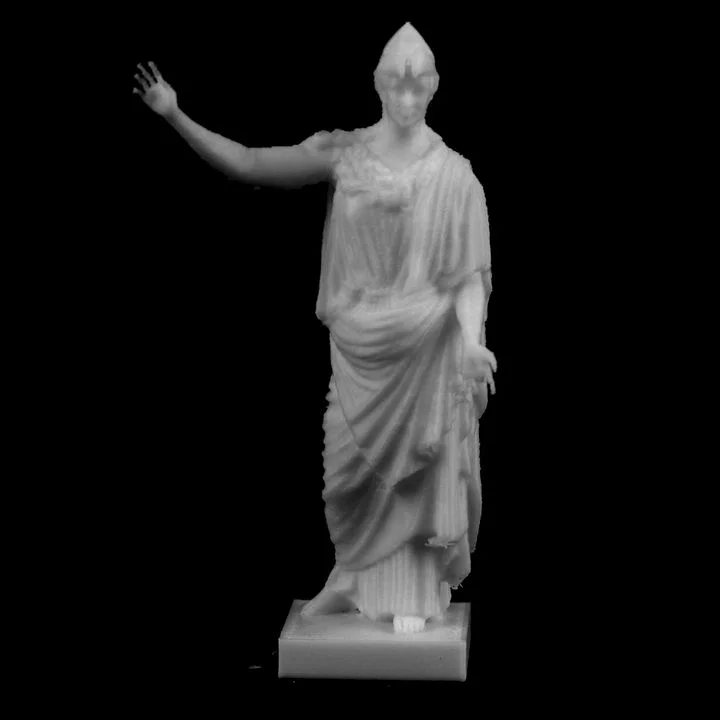
Athena of Velletri at the Louvre, Paris
- Type
- 3D Models
- Dimensions
- 3D
- Setting
- Fantasy
A model of the Athena of Velletri, a large ancient statue depicting the goddess in a helmet and serpent-edged breastplate.
Many ancient copies of the bronze have been found (and the Baiae find suggests industrial-scale production of them), but the most famous is the 3.05 m (10 ft) high example found in the ruins of a Roman villa in a vineyard near Velletri in 1797. Upon rediscovery, it was purchased by Vincenzo Pacetti, who added the peak of the helmet, the straight forearm, the hands, the feet, the snakes, and a section of the cloak, and polished the overall surface. He then sold it to the French Directory, which transported it to Rome, where it was soon seized by Neapolitan armies when they briefly held the city from November to December 1798 during the opening stages of the War of the Second Coalition. France then regained it in the Treaty of Florence (28 March 1801), and it was displayed at the Louvre from December 1803 onwards. This huge statue of Athena, found in Velletri in the eighteenth century, is a copy of a bronze effigy, now lost, known from Roman copies and fragments of antique casts, found in Baia, near Naples. The original, dating from about 430 BC, is generally attributed to Cresilas, a Cretan sculptor who also produced a portrait of Pericles (also on Scan the World), a copy of which is in the British Museum. The hero's oval face and sharply defined features are strikingly similar to those of the goddess. In 1797 Vicenzo Pacetti, an art restorer, discovered a huge statue, more than three meters tall, in the ruins of a Roman villa near Velletri, a small Italian town whose name has now become synonymous with the copies of this style of statue. The helmet and aegis (a breastplate edged with serpents and with the head of the Gorgon Medusa fixed in the center) indicate that the statue represents the goddess Athena-known by the Romans as Pallas or Minerva. The statue was purchased by the French commissioners of the Directoire and taken to Rome before being confiscated by Neapolitan troops in 1798 and moved to the royal collections in Naples. On 28 March 1798, the work was…