GetAssetPack

Charles V in Prisenhof, Ghent
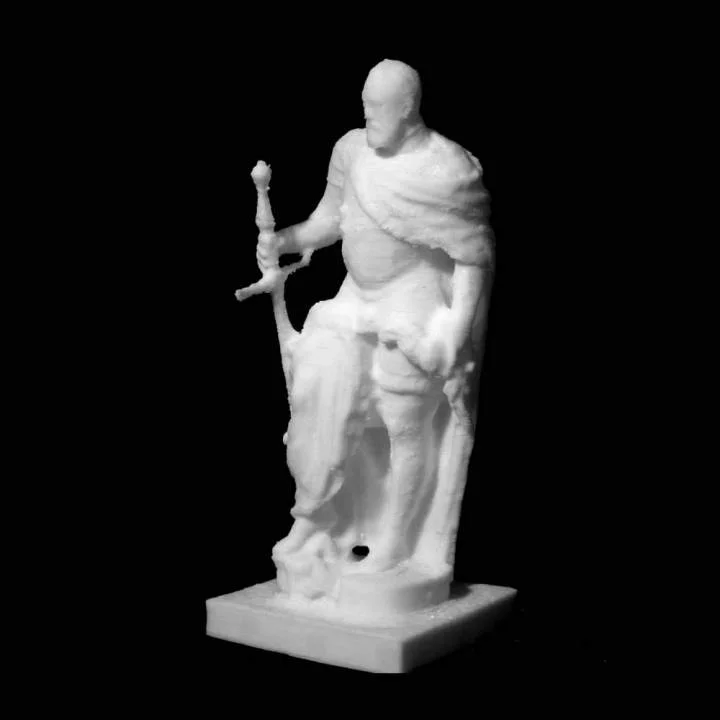
Charles V in Prisenhof, Ghent
Type
3D Models
Dimensions
3D

Charles V (24 February 1500 – 21 September 1558), was a Duke of Burgundy and Holy Roman Emperor. He was ruler of both the Spanish Empire from 1516 and Holy Roman Empire from 1519, as well as of Habsburg Netherlands from 1506, until he voluntarily stepped down from these and other positions by a series of abdications between 1554 and 1556. Through inheritance, he brought together under his rule extensive territories in western, central, and southern Europe, and theSpanish colonies in the Americas and Asia. As a result, his domains spanned nearly four million square kilometers, and were the first to be described as "the empire on which the sun never sets". Charles was the heir of three of Europe's leading dynasties: the Houses of Valois-Burgundy (Netherlands), Habsburg (Holy Roman Empire), and Trastámara (Spain). He inherited the Burgundian Netherlands and the Franche-Comté as heir of the House of Valois-Burgundy. From his own dynasty, the Habsburgs, he inherited Austria and other lands in central Europe. He was also elected to succeed his Habsburg grandfather, Maximilian I as Holy Roman Emperor, a title held by the Habsburgs since 1440. From the Spanish House of Trastámara, he inherited the crowns of Castile, which was in the process of developing a nascent empire in the Americas and Asia, and Aragon. The latter included a Mediterranean empire that extended toSouthern Italy. Charles was the first king to rule Castile and Aragon simultaneously in his own right, and, as a result, is sometimes referred to as the first King of Spain. The personal union, under Charles, of the Holy Roman Empire with the Spanish Empire resulted in the closest Europe would come to a universal monarchy in thepost-classical era.[6] Fearing that his vast inheritance would lead to the realization of a universal monarchy and that he was trying to create a European hegemony, Charles was the object of hostility from many enemies. His reign was dominated by war, and particularly by three major…

Available on

Search by image

Upload a reference to find previews with similar colors, contrast, and detail.

Charles V in Prisenhof, Ghent

Charles V in Prisenhof, Ghent
MyMiniFactory
3D Models
License not indexed
  • i Check the terms on the original listing.
Show full terms

Charles V (24 February 1500 – 21 September 1558), was a Duke of Burgundy and Holy Roman Emperor. He was ruler of both the Spanish Empire from 1516 and Holy Roman Empire from 1519, as well as of Habsburg Netherlands from 1506, until he voluntarily stepped down from these and other positions by a series of abdications between 1554 and 1556. Through inheritance, he brought together under his rule extensive territories in western, central, and southern Europe, and theSpanish colonies in the Americas and Asia. As a result, his domains spanned nearly four million square kilometers, and were the first to be described as "the empire on which the sun never sets". Charles was the heir of three of Europe's leading dynasties: the Houses of Valois-Burgundy (Netherlands), Habsburg (Holy Roman Empire), and Trastámara (Spain). He inherited the Burgundian Netherlands and the Franche-Comté as heir of the House of Valois-Burgundy. From his own dynasty, the Habsburgs, he inherited Austria and other lands in central Europe. He was also elected to succeed his Habsburg grandfather, Maximilian I as Holy Roman Emperor, a title held by the Habsburgs since 1440. From the Spanish House of Trastámara, he inherited the crowns of Castile, which was in the process of developing a nascent empire in the Americas and Asia, and Aragon. The latter included a Mediterranean empire that extended toSouthern Italy. Charles was the first king to rule Castile and Aragon simultaneously in his own right, and, as a result, is sometimes referred to as the first King of Spain. The personal union, under Charles, of the Holy Roman Empire with the Spanish Empire resulted in the closest Europe would come to a universal monarchy in thepost-classical era.[6] Fearing that his vast inheritance would lead to the realization of a universal monarchy and that he was trying to create a European hegemony, Charles was the object of hostility from many enemies. His reign was dominated by war, and particularly by three major simultaneous conflicts: the Habsburg-Valois Wars with France, the struggle to halt the Ottoman advance, and the Protestant Reformationresulting in conflict with the German princes. The wars with France, mainly fought in Italy, resulted in recovery of territory lost at the beginning of his reign and included the decisive defeat and capture of Francis I of France at the Battle of Pavia in 1525. France recovered and the wars continued for the remainder of Charles's reign. Enormously expensive, they l

View original listing