GetAssetPack

Furietti Centaur 'Centaur tormented by Eros' at The Royal Cast Collection, Copenhagen
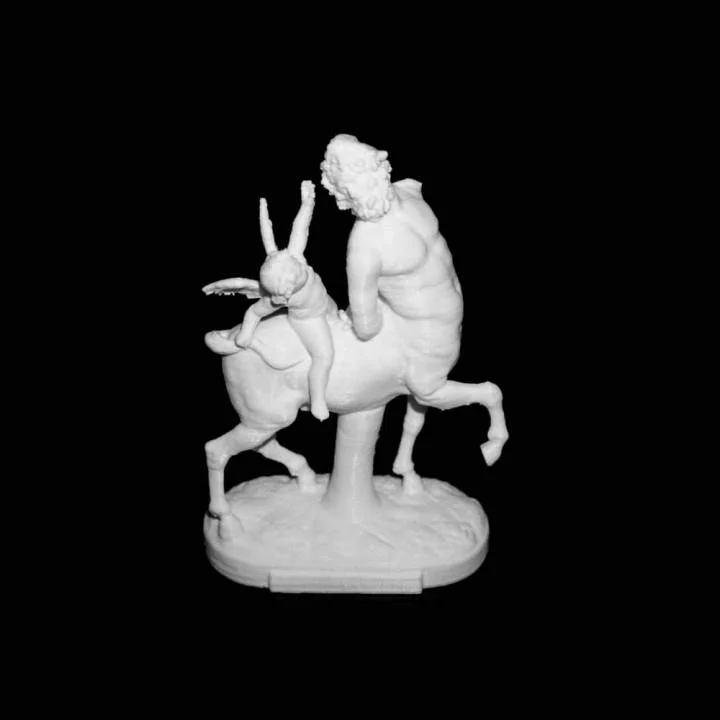
Furietti Centaur 'Centaur tormented by Eros' at The Royal Cast Collection, Copenhagen
Type
3D Models
Dimensions
3D

The Furietti Centaurs (known as the Old Centaur and Young Centaur, or Older Centaur and Younger Centaur, when being treated separately) are a pair of Hellenistic or Roman grey-black marble sculptures of centaurs based on Hellenistic models. One is a mature, bearded centaur, with a pained expression, and the other is a young smiling centaur with his arm raised. The amorini are missing that once rode the backs of these centaurs, which are the outstanding examples of a group of sculptures varying the motif. The strongly contrasted moods were intended to remind the Roman viewer of the soul troubled in pain with love or uplifted in joy, themes of Plato's Phaedrus and Hellenistic poetry. The sculptures were found together at Hadrian's Villa in Tivoli by Monsignor Giuseppe Alessandro Furietti in December 1736; they were the outstanding pieces of his collection of antiquities, which he refused to give to Pope Benedict XIV— at the cost of a cardinal's hat. Furietti was eventually created cardinal priest, by Pope Clement XIII in the consistory of 24 September 1759. After the cardinal's death, his heirs sold the centaurs and the Furietti mosaic of four drinking doves for 14,000 scudi, and they have been in the Capitoline Museum ever since. Both statues bear the signatures of Aristeas and Papias of Aphrodisias, a city in Asia Minor— we cannot be certain about the exact relationship of the signatures to the sculptures, whether as originators of the model or sculptors of these versions. Where the sculptures were produced is not sure either: whether in Aphrodisias, or whether the artists, of whom nothing else is known, had come from there to Rome. To judge by the stylistic date these Hadrianic copies will date to the late 1st or early 2nd century AD. They are generally assumed to be copies of 2nd century BC bronze Hellenistic originals, though recent critical study, notably by Brunilde Sismondo Ridgway, suggests that many sculptural types usually thought to be Hellenistic are in…

Available on

Search by image

Upload a reference to find previews with similar colors, contrast, and detail.

Furietti Centaur 'Centaur tormented by Eros' at The Royal Cast Collection, Copenhagen

Furietti Centaur 'Centaur tormented by Eros' at The Royal Cast Collection, Copenhagen
MyMiniFactory
3D Models
License not indexed
  • i Check the terms on the original listing.
Show full terms

The Furietti Centaurs (known as the Old Centaur and Young Centaur, or Older Centaur and Younger Centaur, when being treated separately) are a pair of Hellenistic or Roman grey-black marble sculptures of centaurs based on Hellenistic models. One is a mature, bearded centaur, with a pained expression, and the other is a young smiling centaur with his arm raised. The amorini are missing that once rode the backs of these centaurs, which are the outstanding examples of a group of sculptures varying the motif. The strongly contrasted moods were intended to remind the Roman viewer of the soul troubled in pain with love or uplifted in joy, themes of Plato's Phaedrus and Hellenistic poetry. The sculptures were found together at Hadrian's Villa in Tivoli by Monsignor Giuseppe Alessandro Furietti in December 1736; they were the outstanding pieces of his collection of antiquities, which he refused to give to Pope Benedict XIV— at the cost of a cardinal's hat. Furietti was eventually created cardinal priest, by Pope Clement XIII in the consistory of 24 September 1759. After the cardinal's death, his heirs sold the centaurs and the Furietti mosaic of four drinking doves for 14,000 scudi, and they have been in the Capitoline Museum ever since.   Both statues bear the signatures of Aristeas and Papias of Aphrodisias, a city in Asia Minor— we cannot be certain about the exact relationship of the signatures to the sculptures, whether as originators of the model or sculptors of these versions. Where the sculptures were produced is not sure either: whether in Aphrodisias, or whether the artists, of whom nothing else is known, had come from there to Rome. To judge by the stylistic date these Hadrianic copies will date to the late 1st or early 2nd century AD. They are generally assumed to be copies of 2nd century BC bronze Hellenistic originals, though recent critical study, notably by Brunilde Sismondo Ridgway, suggests that many sculptural types usually thought to be Hellenistic are in fact Roman pastiches or inventions. Another copy of the same type as the Old Centaur, this time in white marble, was excavated in Rome in the 17th century (having lost its probable Young Centaur pair). It entered the Borghese collection, but was acquired from Camillo Filippo Ludovico Borgheseby Napoleon in 1807 and is now in the Louvre Museum. It has Eros on the centaur's back, teasing him, which has not survived on the Capitoline example, though Eros' arm and foot and the centaur's left

View original listing