 GetAssetPack
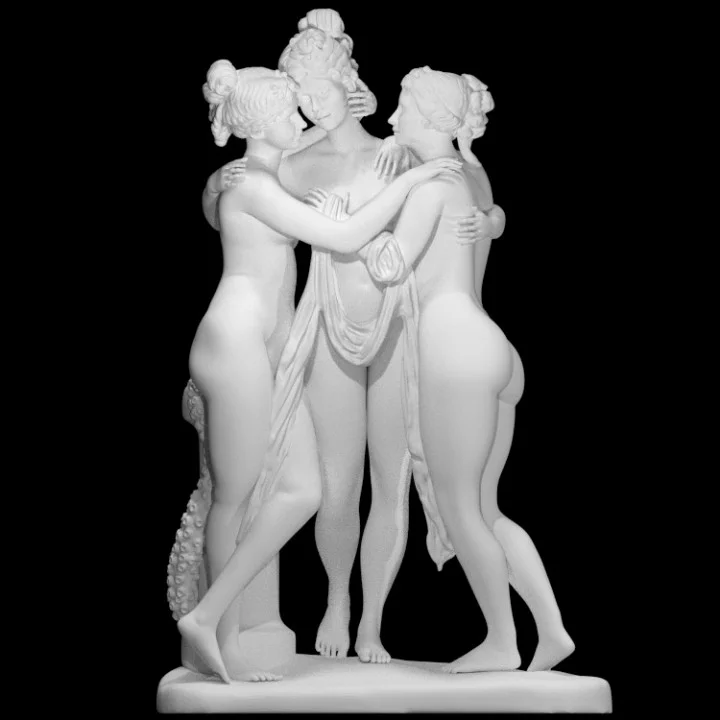
The Three Graces at the Hermitage Museum, Russia
- Type
- 3D Models
- Dimensions
- 3D
- Setting
- Fantasy
A 3D model of a marble group depicting the Three Graces, mythological figures associated with beauty, charm and joy.
Antonio Canova’s statue The Three Graces is a Neoclassical sculpture, in marble, of the mythological three charites, daughters of Zeus – identified on some engravings of the statue as, from left to right, Euphrosyne, Aglaea and Thalia - who were said to represent beauty, charm and joy. The Graces presided over banquets and gatherings primarily to entertain and delight the guests of the gods. As such they have always proved to be attractive figures for historical artists including Sandro Botticelli and Bertel Thorvaldsen. The three nude woman, symbols of beauty, arts and fertility, stand together in a line in a composition to signify their alliance. The marble, lifesize piece was created in the 11th Century AD, discovered in Rome on mount Caelius. The piece is based on a previous artwork produced in the hellentistic period (330-30 BC) that can be found at the Metropolitan Museum of Art, New York. Other versions of this piece in sculpture can be found here and here This piece is a rework of of the original by Jean-Jacques Pradier (1790 - 1852), created out of marble and presented to the salon in 1831. Based loosely from Botticelli's painting of the Three Graces in 'La Primavera', 1550. This object is part of "Scan The World". Scan the World is a non-profit initiative introduced by MyMiniFactory, through which we are creating a digital archive of fully 3D printable sculptures, artworks and landmarks from across the globe for the public to access for free. Scan the World is an open source, community effort, if you have interesting items around you and would like to contribute, email stw@myminifactory.com to find out how you can help. This marble figure group was made for the Sculpture Gallery at Woburn Abbey, Bedfordshire, and was originally housed in a specially designed Temple of the Graces. It was commissioned from Antonio Canova by John Russel, 6th Duke of Bedford, who visited the sculptor in his studio in Rome in 1814, and was captivated by the group of the Three…