GetAssetPack

Orlando Furioso in The Louvre, Lens
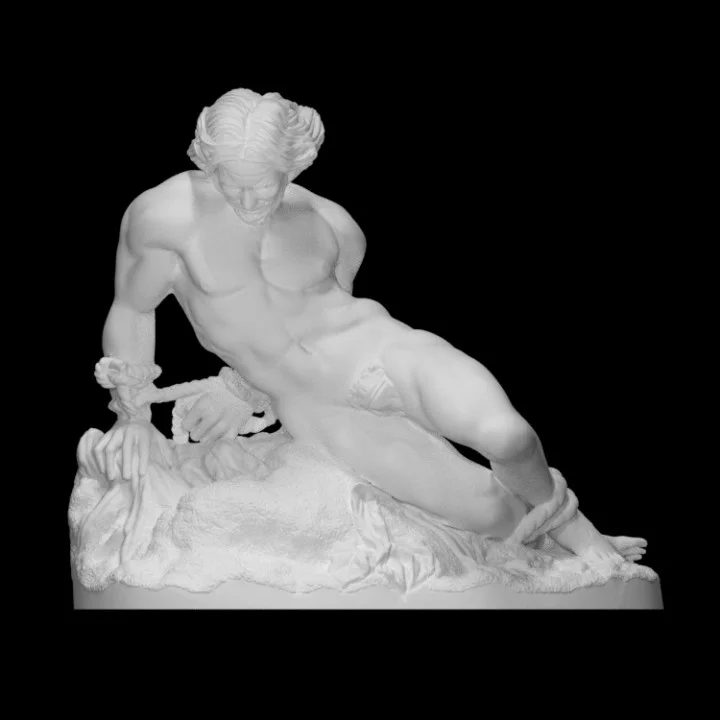
Orlando Furioso in The Louvre, Lens
Type
3D Models
Dimensions
3D
Setting
Medieval

Roland was the bravest and most loyal of the 12 legendary paladins, or knights, who served Charlemagne, king of the Franks*. Although Charlemagne was a historical figure, many fanciful tales about the king and his knights appeared during the Middle Ages. It was said that Roland stood 8 feet tall and carried a magical sword called Durindana (or Durendal) that had once belonged to the Trojan hero Hector. According to medieval stories, Roland (or Orlando) was the son of Charlemagne's sister. Living as a poor peasant in Italy, he was welcomed to the court of the king after his true identity was revealed. Although a powerful warrior, Roland's concern with winning honor and fame eventually cost him his life. Ganelon to negotiate with the Muslim leader. Instead, jealous of Roland, Ganelon plotted with the enemy and revealed the route Roland's army planned to take. The Muslims waited for Roland and ambushed him at Roncesvalles in the Pyrenees Mountains. The paladins had told Roland to blow his ivory horn to summon reinforcements from Charlemagne, but Roland refused to call for help until the battle was almost lost. By then it was too late. When Charlemagne's troops arrived, Roland and many of the bravest paladins were dead. At the end of the story, Charlemagne had Ganelon killed for his treachery The expressive power of the Roland, whose destructive fury was hampered, impressed the public 1831. Betrayed furniture in his love for the princess Angelica, the paladin expresses his despair with unprecedented violence, any romantic. However, Duseigneur honors her knight worthy of heroic nudity of classical sculpture. Duseigneur young sculptor, 23, caused a sensation at the 1831 Salon by presenting the plaster model of Roland furious. The violence of the expression immediately made a manifesto of romantic sculpture. Owned by the wrath of her unrequited love and struggling to free himself from his bonds, Roland band muscles, twists his limbs and torso, hands gripping the ground…

Available on

Search by image

Upload a reference to find previews with similar colors, contrast, and detail.

Orlando Furioso in The Louvre, Lens

Orlando Furioso in The Louvre, Lens
MyMiniFactory
3D Models
License not indexed
  • i Check the terms on the original listing.
Show full terms

Roland was the bravest and most loyal of the 12 legendary paladins, or knights, who served Charlemagne, king of the Franks*. Although Charlemagne was a historical figure, many fanciful tales about the king and his knights appeared during the Middle Ages. It was said that Roland stood 8 feet tall and carried a magical sword called Durindana (or Durendal) that had once belonged to the Trojan hero Hector. According to medieval stories, Roland (or Orlando) was the son of Charlemagne's sister. Living as a poor peasant in Italy, he was welcomed to the court of the king after his true identity was revealed. Although a powerful warrior, Roland's concern with winning honor and fame eventually cost him his life. Ganelon to negotiate with the Muslim leader. Instead, jealous of Roland, Ganelon plotted with the enemy and revealed the route Roland's army planned to take. The Muslims waited for Roland and ambushed him at Roncesvalles in the Pyrenees Mountains. The paladins had told Roland to blow his ivory horn to summon reinforcements from Charlemagne, but Roland refused to call for help until the battle was almost lost. By then it was too late. When Charlemagne's troops arrived, Roland and many of the bravest paladins were dead. At the end of the story, Charlemagne had Ganelon killed for his treachery The expressive power of the Roland, whose destructive fury was hampered, impressed the public 1831. Betrayed furniture in his love for the princess Angelica, the paladin expresses his despair with unprecedented violence, any romantic. However, Duseigneur honors her knight worthy of heroic nudity of classical sculpture.   Duseigneur young sculptor, 23, caused a sensation at the 1831 Salon by presenting the plaster model of Roland furious. The violence of the expression immediately made a manifesto of romantic sculpture. Owned by the wrath of her unrequited love and struggling to free himself from his bonds, Roland band muscles, twists his limbs and torso, hands gripping the ground; the face is contorted in pain, eyes are rolled back by dementia. The writer and poet Théophile Gautier (1811-1872) dedicated an ode to the sculptor, where he sings: "Roland the paladin, who, foaming at the mouth,Under a frowning, rolling a fawn and fishy eye,And on acute rocks he uprooted,Naked, mad love, the fire in the nostrilProtrudes large bones of her large breasts,And twists his chained members. " The work, however, reveals all the ambiguities of romantic sculpture. The sculptor w

View original listing