GetAssetPack

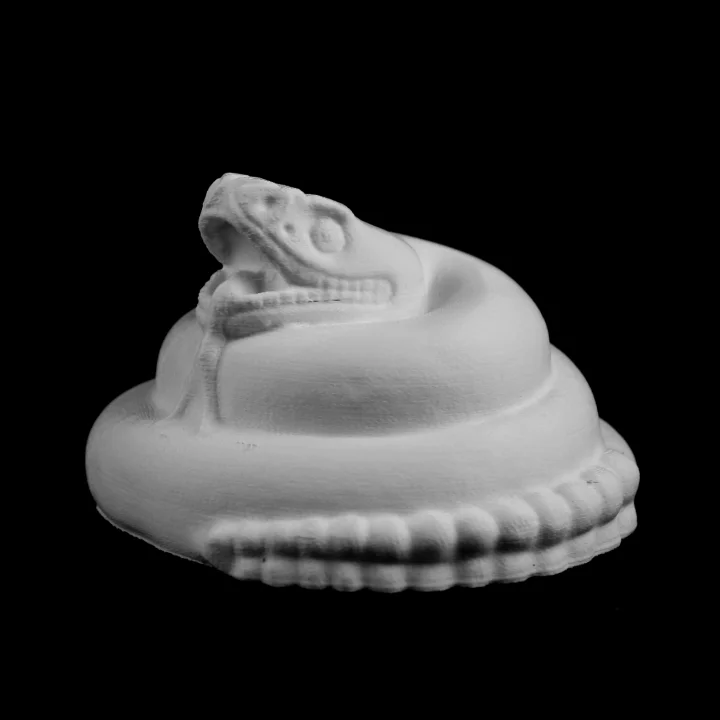
Stone Rattlesnake at The British Museum, London
Stone Rattlesnake at The British Museum, London
Type
3D Models
Dimensions
3D
Style
Realistic
Setting
Asian, Nature

This realistic depiction of a rattlesnake (Crotalus durissus) accurately records many important anatomical details. The Aztecs carved naturalistic sculptures of selected reptiles, birds and insects, suggesting that their life cycles and habits were closely observed. On this snake the small circular cavities on either side of the head between the nostrils and the eyes are the external openings to highly effective heat sensors, enabling the snake to locate and strike at prey in complete darkness. The hole visible on the floor of the mouth is the trachea. In snakes this is movable, so that when a snake is ingesting its prey, the trachea moves forward to enable it to continue to breathe. The traces of red pigment on the right nostril and mouth and the red dots on the surfaces of the ventral coils may allude to the coloured skin of some species of rattlesnakes. The rattle consists of thirteen segments. Each time the snake sheds its skin a new segment is produced. This object is part of "Scan The World". Scan the World is a non-profit initiative introduced by MyMiniFactory, through which we are creating a digital archive of fully 3D printable sculptures, artworks and landmarks from across the globe for the public to access for free. Scan the World is an open source, community effort, if you have interesting items around you and would like to contribute, email stw@myminifactory.com to find out how you can help. | Download free and paid 3D printable STL files

Available on

Search by image

Upload a reference to find previews with similar colors, contrast, and detail.

Stone Rattlesnake at The British Museum, London

Stone Rattlesnake at The British Museum, London
MyMiniFactory
3D Models
License not indexed
  • i Check the terms on the original listing.
Show full terms

This realistic depiction of a rattlesnake (Crotalus durissus) accurately records many important anatomical details. The Aztecs carved naturalistic sculptures of selected reptiles, birds and insects, suggesting that their life cycles and habits were closely observed. On this snake the small circular cavities on either side of the head between the nostrils and the eyes are the external openings to highly effective heat sensors, enabling the snake to locate and strike at prey in complete darkness. The hole visible on the floor of the mouth is the trachea. In snakes this is movable, so that when a snake is ingesting its prey, the trachea moves forward to enable it to continue to breathe. The traces of red pigment on the right nostril and mouth and the red dots on the surfaces of the ventral coils may allude to the coloured skin of some species of rattlesnakes. The rattle consists of thirteen segments. Each time the snake sheds its skin a new segment is produced.   This object is part of "Scan The World". Scan the World is a non-profit initiative introduced by MyMiniFactory, through which we are creating a digital archive of fully 3D printable sculptures, artworks and landmarks from across the globe for the public to access for free. Scan the World is an open source, community effort, if you have interesting items around you and would like to contribute, email stw@myminifactory.com to find out how you can help. | Download free and paid 3D printable STL files

View original listing