GetAssetPack

Lucius Quinctius Cincinnatus at the Schloss Schönbrunn Schlosspark, Vienna
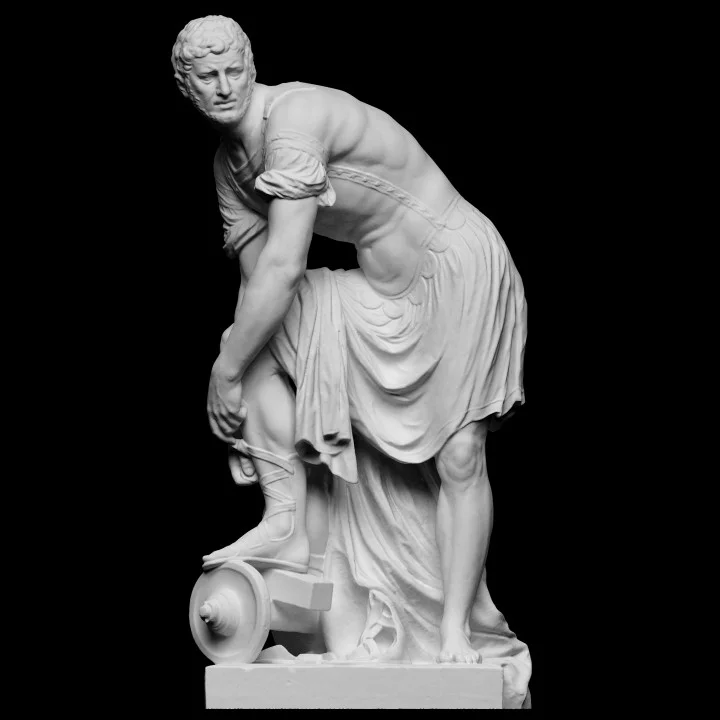
Lucius Quinctius Cincinnatus at the Schloss Schönbrunn Schlosspark, Vienna
Type
3D Models
Dimensions
3D

Lucius Quinctius Cincinnatus (519–430 BC) was a Roman aristocrat and statesman whose service as consul in 460 BC and dictator in 458 BC and 439 BC made him a model of civic virtue. Cincinnatus was regarded by the Romans, especially the aristocratic patrician class, as one of the heroes of early Rome and as a model of Roman virtue and simplicity. He was a persistent opponent of the plebeians. When his son, Caeso Quinctius, was convicted and condemned to death, Cincinnatus was forced to live in humble circumstances, working on his own small farm, until an invasion caused him to be called to serve Rome as dictator, an office which he resigned two weeks later, after completing his task of defeating the rival tribes of the Aequians, Sabines, and Volscians. His immediate resignation of his near-absolute authority with the end of the crisis has often been cited as an example of outstanding leadership, service to the greater good, civic virtue, lack of personal ambition, and modesty. As a result, he has inspired a number of organizations and other entities, many of which are named in his honor. | Download free and paid 3D printable STL files

Available on

Search by image

Upload a reference to find previews with similar colors, contrast, and detail.

Lucius Quinctius Cincinnatus at the Schloss Schönbrunn Schlosspark, Vienna

Lucius Quinctius Cincinnatus at the Schloss Schönbrunn Schlosspark, Vienna
MyMiniFactory
3D Models
License not indexed
  • i Check the terms on the original listing.
Show full terms

Lucius Quinctius Cincinnatus (519–430 BC) was a Roman aristocrat and statesman whose service as consul in 460 BC and dictator in 458 BC and 439 BC made him a model of civic virtue. Cincinnatus was regarded by the Romans, especially the aristocratic patrician class, as one of the heroes of early Rome and as a model of Roman virtue and simplicity. He was a persistent opponent of the plebeians. When his son, Caeso Quinctius, was convicted and condemned to death, Cincinnatus was forced to live in humble circumstances, working on his own small farm, until an invasion caused him to be called to serve Rome as dictator, an office which he resigned two weeks later, after completing his task of defeating the rival tribes of the Aequians, Sabines, and Volscians. His immediate resignation of his near-absolute authority with the end of the crisis has often been cited as an example of outstanding leadership, service to the greater good, civic virtue, lack of personal ambition, and modesty. As a result, he has inspired a number of organizations and other entities, many of which are named in his honor.       | Download free and paid 3D printable STL files

View original listing