GetAssetPack

Budai at The Royal Ontario Museum, Ontario
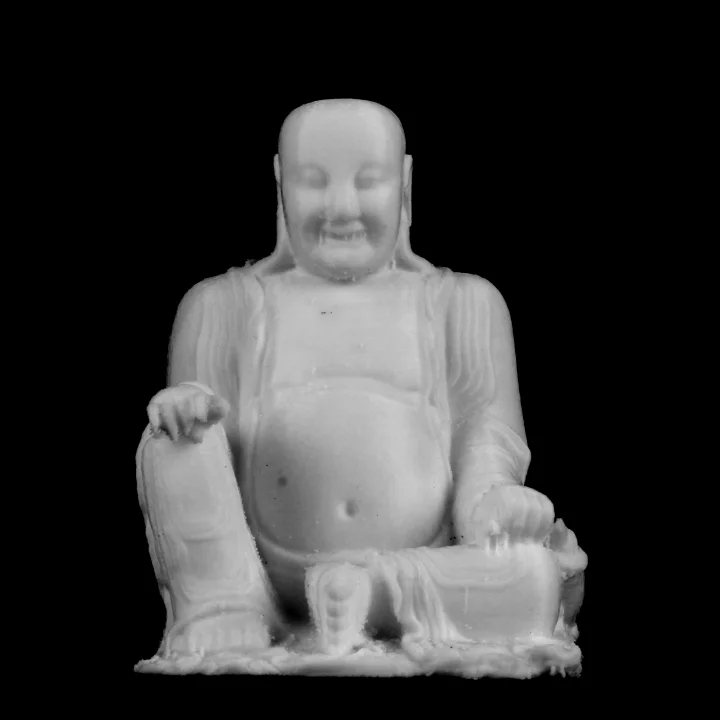
Budai at The Royal Ontario Museum, Ontario
Type
3D Models
Dimensions
3D

Budai or Pu-Tai, or 布袋 (Hotei) in Japanese, Bố Đại in Vietnamese, is a Chinese folkloric deity. His name means "Cloth Sack," and comes from the bag that he is conventionally depicted as carrying. He is usually identified with or seen as an incarnation of Maitreya, the future Buddha, so much so that the Budai image is one of the main forms in which Maitreya is depicted in East Asia. He is almost always shown smiling or laughing, hence his nickname in Chinese, the Laughing Buddha In the West, the image of Budai is often mistaken for Gautama Buddha. This wooden sculpture (decorated with gold lacquer) originates from the Henan Province in the 16th-17th Century (Ming dynasty). From the Song dynasty (960-1278) the Monk with the Cloth Bag became equated with the Buddha of the Future, Maitreya. Statues of the fat-bellied Budai are often found in the entrance halls of Buddhist temples. This object is part of "Scan The World". Scan the World is a non-profit initiative introduced by MyMiniFactory, through which we are creating a digital archive of fully 3D printable sculptures, artworks and landmarks from across the globe for the public to access for free. Scan the World is an open source, community effort, if you have interesting items around you and would like to contribute, email stw@myminifactory.com to find out how you can help. | Download free and paid 3D printable STL files

Available on

Search by image

Upload a reference to find previews with similar colors, contrast, and detail.

Budai at The Royal Ontario Museum, Ontario

Budai at The Royal Ontario Museum, Ontario
MyMiniFactory
3D Models
License not indexed
  • i Check the terms on the original listing.
Show full terms

Budai or Pu-Tai, or 布袋 (Hotei) in Japanese, Bố Đại in Vietnamese, is a Chinese folkloric deity. His name means "Cloth Sack," and comes from the bag that he is conventionally depicted as carrying. He is usually identified with or seen as an incarnation of Maitreya, the future Buddha, so much so that the Budai image is one of the main forms in which Maitreya is depicted in East Asia. He is almost always shown smiling or laughing, hence his nickname in Chinese, the Laughing Buddha In the West, the image of Budai is often mistaken for Gautama Buddha. This wooden sculpture (decorated with gold lacquer) originates from the Henan Province in the 16th-17th Century (Ming dynasty). From the Song dynasty (960-1278) the Monk with the Cloth Bag became equated with the Buddha of the Future, Maitreya. Statues of the fat-bellied Budai are often found in the entrance halls of Buddhist temples.   This object is part of "Scan The World". Scan the World is a non-profit initiative introduced by MyMiniFactory, through which we are creating a digital archive of fully 3D printable sculptures, artworks and landmarks from across the globe for the public to access for free. Scan the World is an open source, community effort, if you have interesting items around you and would like to contribute, email stw@myminifactory.com to find out how you can help. | Download free and paid 3D printable STL files

View original listing