 GetAssetPack
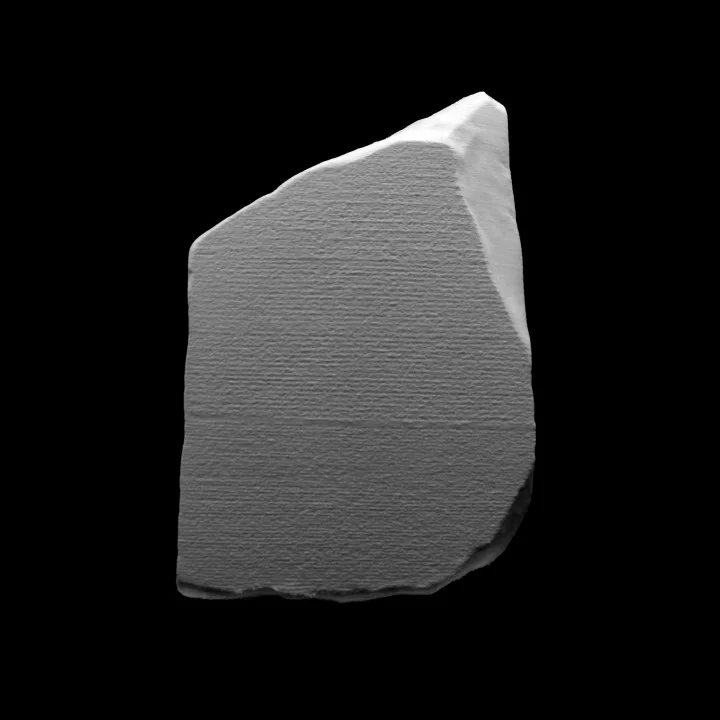
Rosetta Stone at The British Museum, London
- Type
- 3D Models
- Dimensions
- 3D
A model of the Rosetta Stone, an inscribed stele featuring Egyptian hieroglyphs, Demotic script and Ancient Greek.
The Rosetta Stone is a granodiorite stele inscribed with a decreeissued at Memphis, Egypt in 196 BC on behalf of King Ptolemy V. The decree appears in three scripts: the upper text is Ancient Egyptianhieroglyphs, the middle portion Demotic script, and the lowest Ancient Greek. Because it presents essentially the same text in all three scripts (with some minor differences among them), it provided the key to the modern understanding of Egyptian hieroglyphs. Although it is believed to have originally been displayed within atemple, possibly at nearby Sais, the stone was probably moved during the early Christian or medieval period and was eventually used as building material in the construction of Fort Julien near the town ofRashid (Rosetta) in the Nile Delta. It was rediscovered there in 1799 by a soldier, Pierre-François Bouchard, of the Napoleonic expedition to Egypt. As the first Ancient Egyptian bilingual text recovered in modern times, the Rosetta Stone aroused widespread public interest with its potential to decipher this hitherto untranslated ancient language. Lithographic copies and plaster casts began circulating among European museums and scholars. Meanwhile, British troopsdefeated the French in Egypt in 1801, and the original stone came into British possession under the Capitulation of Alexandria. Transported to London, it has been on public display at the British Museum since 1802. It is the most-visited object in the British Museum. Study of the decree was already under way as the first full translation of the Greek text appeared in 1803. It was 20 years, however, before the transliteration of the Egyptian scripts was announced by Jean-François Champollion in Paris in 1822; it took longer still before scholars were able to read Ancient Egyptian inscriptions and literature confidently. Major advances in the decoding were recognition that the stone offered three versions of the same text (1799); that the demotic text used phonetic characters to spell foreign…