GetAssetPack

Sir Andrew Fountaine at The British Museum
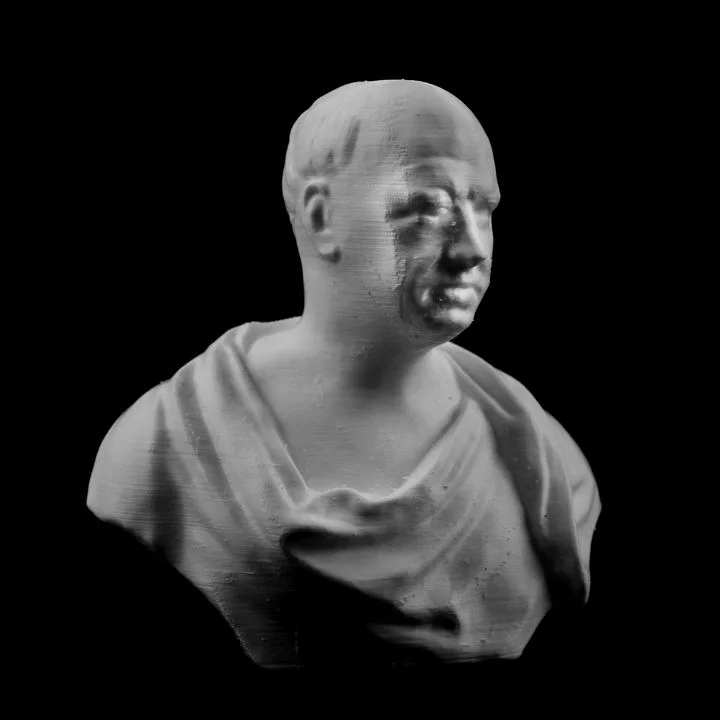
Sir Andrew Fountaine at The British Museum
Type
3D Models
Dimensions
3D

A 3D model of Sir Andrew Fountaine; the description provides biographical details but no further model specifics.

Sir Andrew Fountain (1676–1753), virtuoso, born in 1676, was the eldest son of Andrew Fountaine, M.P., of Narford, Norfolk, by his wife Sarah, daughter of Sir Thomas Chicheley, master of the ordnance, and belonged to an old Norfolk family (see Burke, Landed Gentry, 1886, i. 673;Blomefield, Norfolk, vi. 233 f.). He was educated at Christ Church, Oxford, under Dr. Aldrich, proceeding B.A. 1696 and M.A. 1700, and studied Anglo-Saxon under Dr. Hickes, in whose ‘Thesaurus’ he published ‘Numismata Anglo-Saxonica et Anglo-Danica illustrata,’ Oxford, 1705, folio. Fountaine was knighted by William III at Hampton Court on 30 Dec. 1699, and succeeded to the estate at Narford on his father's death, 7 Feb. 1706. In 1701 he went with Lord Macclesfield on a mission to the elector of Hanover. He then passed through Munich, and travelled in Italy, buying antiquities and curiosities. In 1714 he stayed for a long time in Paris, and again visited Italy, staying nearly three years at Rome and Florence. In 1725 he was made vice-chamberlain to Princess Caroline, and he held the same office when she became queen. He was also tutor to Prince William, and was installed for him (as proxy) knight of the Bath, and had on that occasion a patent granted him (14 Jan. 1725) for adding supporters to his arms. On 14 July 1727 he succeeded Sir Isaac Newton as warden of the mint (Ruding, Annals, i. 29), and held the office until his death, which took place on 4 Sept. 1753 at Narford, where from 1732 he had chiefly lived surrounded by his collections. He was buried at Narford. Fountaine was not married. His sister, Elizabeth, became the wife of Colonel Edward Clent. Their grandson, Mr. Brigg Price of Narford, assumed the name of Fountaine and has descendants. There are two busts of Fountaine, by Roubiliac and Hoare of Bath, in Wilton House (Michaelis, Ancient Marbles, p. 46), and at least three portraits (one a miniature) are, or were, preserved at Narford. A well-known portrait at Holland House…

Available on

Search by image

Upload a reference to find previews with similar colors, contrast, and detail.

Sir Andrew Fountaine at The British Museum

Sir Andrew Fountaine at The British Museum
MyMiniFactory
3D Models
License not indexed
  • i Check the terms on the original listing.
Show full terms

Sir Andrew Fountain (1676–1753), virtuoso, born in 1676, was the eldest son of Andrew Fountaine, M.P., of Narford, Norfolk, by his wife Sarah, daughter of Sir Thomas Chicheley, master of the ordnance, and belonged to an old Norfolk family (see Burke, Landed Gentry, 1886, i. 673;Blomefield, Norfolk, vi. 233 f.). He was educated at Christ Church, Oxford, under Dr. Aldrich, proceeding B.A. 1696 and M.A. 1700, and studied Anglo-Saxon under Dr. Hickes, in whose ‘Thesaurus’ he published ‘Numismata Anglo-Saxonica et Anglo-Danica illustrata,’ Oxford, 1705, folio. Fountaine was knighted by William III at Hampton Court on 30 Dec. 1699, and succeeded to the estate at Narford on his father's death, 7 Feb. 1706. In 1701 he went with Lord Macclesfield on a mission to the elector of Hanover. He then passed through Munich, and travelled in Italy, buying antiquities and curiosities. In 1714 he stayed for a long time in Paris, and again visited Italy, staying nearly three years at Rome and Florence. In 1725 he was made vice-chamberlain to Princess Caroline, and he held the same office when she became queen. He was also tutor to Prince William, and was installed for him (as proxy) knight of the Bath, and had on that occasion a patent granted him (14 Jan. 1725) for adding supporters to his arms. On 14 July 1727 he succeeded Sir Isaac Newton as warden of the mint (Ruding, Annals, i. 29), and held the office until his death, which took place on 4 Sept. 1753 at Narford, where from 1732 he had chiefly lived surrounded by his collections. He was buried at Narford. Fountaine was not married. His sister, Elizabeth, became the wife of Colonel Edward Clent. Their grandson, Mr. Brigg Price of Narford, assumed the name of Fountaine and has descendants. There are two busts of Fountaine, by Roubiliac and Hoare of Bath, in Wilton House (Michaelis, Ancient Marbles, p. 46), and at least three portraits (one a miniature) are, or were, preserved at Narford. A well-known portrait at Holland House, assumed to represent Addison, has been identified as a portrait of Fountaine [see under Addison, Joseph]. There is a portrait-medal of Fountaine, made in 1744 by J. A. Dassier, in the British Museum (Hawkins, Medallic Illustrations, ii. 590), and a rarer portrait-medal (specimen in Brit. Mus.) made at Florence in 1715 by Antonio Selvi. On the reverse is Pallas standing amidst ruins, works of art, coins, &c. (ib. ii. 433; cf. p. 434). Fountaine was distinguished as a connoisseur, and his advice was m

A 3D model of Sir Andrew Fountaine; the description provides biographical details but no further model specifics.

View original listing