GetAssetPack

Monument to Cézanne at the Jardin des Tuileries, Paris
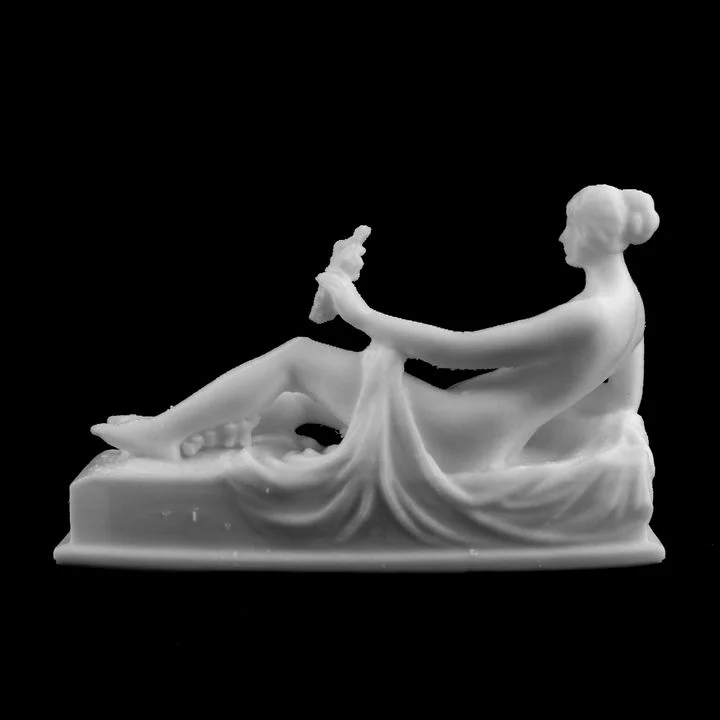
Monument to Cézanne at the Jardin des Tuileries, Paris
Type
3D Models
Dimensions
3D

A 3D model of a reclining girl sculpture created as a tribute to Paul Cézanne, with flowing drapery.

In 1912 Maillol received a commission from Frantz Jourdain, the founder of the Salon d'Automne, and a group of friends of Paul Cézanne, for a monument to the master of Aix-en-Provence, who had died six years earlier. The committee was unable to solicit sufficient funds for the project, however, or agree on the details, and the outbreak of the First World War in 1914 put an end to their plans. Maillol, who regarded Cézanne as "the genius of modern painting" (quoted in J. Rewald, op. cit., p. 19), kept the idea alive, and returned to it following the end of the war in 1918.Maillol had already made several preparatory studies, in which he tried out and rejected several reclining poses, including those seen in many of the smaller bronzes that have since been cast, in which one leg is raised significantly higher than the other. By 1920 the sculptor had arrived at the definitive state for his Monument à Paul Cézanne: the legs of the recumbent girl are only slightly bent, and she presents in her raised hand an offering of olive branches (not included in this lead version). Maillol intended her to be seen as a bather, one of Cézanne's important subjects; she reclines on a flowing drapery, as if she were resting in the current of a river, a symbol of passing time. Her forms are classical, having been rendered in simple, unadorned volumes, in keeping with Cézanne's conception of form as Maillol understood it. The antique stylization of the girl's hair carried connotations of the ancient Roman origins of Provençal culture. Maillol drew on the sense of serenity and repose that he had instilled in this work, as well as the motif of the olive branch, when he undertook his tribute to the French war dead in the Monument de Port-Vendres, 1921-1923.The final version in stone was ready by 1925. Edouard Vuillard executed a large painting in 1931-1937 that shows Maillol at work on the Cézanne monument (Salomon and Cogeval, no. XI-120; fig. 1); he based this tribute to Maillol on a…

Available on

Search by image

Upload a reference to find previews with similar colors, contrast, and detail.

Monument to Cézanne at the Jardin des Tuileries, Paris

Monument to Cézanne at the Jardin des Tuileries, Paris
MyMiniFactory
3D Models
License not indexed
  • i Check the terms on the original listing.
Show full terms

In 1912 Maillol received a commission from Frantz Jourdain, the founder of the Salon d'Automne, and a group of friends of Paul Cézanne, for a monument to the master of Aix-en-Provence, who had died six years earlier. The committee was unable to solicit sufficient funds for the project, however, or agree on the details, and the outbreak of the First World War in 1914 put an end to their plans. Maillol, who regarded Cézanne as "the genius of modern painting" (quoted in J. Rewald, op. cit., p. 19), kept the idea alive, and returned to it following the end of the war in 1918.Maillol had already made several preparatory studies, in which he tried out and rejected several reclining poses, including those seen in many of the smaller bronzes that have since been cast, in which one leg is raised significantly higher than the other. By 1920 the sculptor had arrived at the definitive state for his Monument à Paul Cézanne: the legs of the recumbent girl are only slightly bent, and she presents in her raised hand an offering of olive branches (not included in this lead version). Maillol intended her to be seen as a bather, one of Cézanne's important subjects; she reclines on a flowing drapery, as if she were resting in the current of a river, a symbol of passing time. Her forms are classical, having been rendered in simple, unadorned volumes, in keeping with Cézanne's conception of form as Maillol understood it. The antique stylization of the girl's hair carried connotations of the ancient Roman origins of Provençal culture. Maillol drew on the sense of serenity and repose that he had instilled in this work, as well as the motif of the olive branch, when he undertook his tribute to the French war dead in the Monument de Port-Vendres, 1921-1923.The final version in stone was ready by 1925. Edouard Vuillard executed a large painting in 1931-1937 that shows Maillol at work on the Cézanne monument (Salomon and Cogeval, no. XI-120; fig. 1); he based this tribute to Maillol on a study that he made while the sculpture was in progress (no. XI-116; Musée d'Art Moderne de la Ville de Paris). Maillol had hoped that the citizens of Aix would place the sculpture by the fountain in their town square, believing that the setting and surrounding space were crucial to the harmony of his design. His plans fell through, however, and the town rejected the monument. Gaston Doumergue, the President of France, intervened, and had the state acquire the sculpture for the city of Paris. In Octob

A 3D model of a reclining girl sculpture created as a tribute to Paul Cézanne, with flowing drapery.

View original listing