GetAssetPack

Red Granite Sarcophagus at The British Museum, London
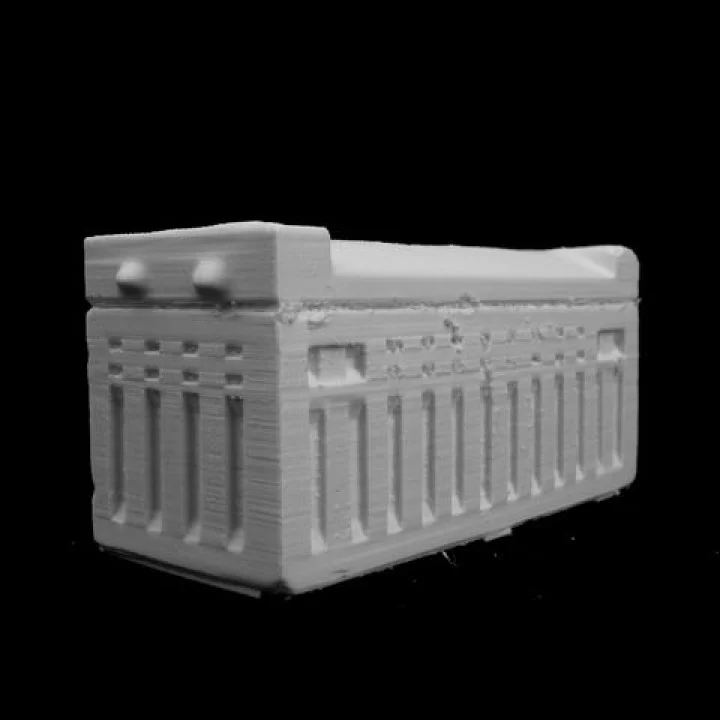
Red Granite Sarcophagus at The British Museum, London
Type
3D Models
Dimensions
3D
Style
Realistic
Setting
Asian

A model of an ancient Egyptian granite sarcophagus with palace-façade panels, false doors, and a rounded top.

Once the Egyptian élite progressed from the practice of burying the dead in simple pits in the ground, it was not long before they developed the concept of a container for the body. Very early examples are made of wood or ceramic, but early in the Old Kingdom (about 2613-2160 BC), the idea of a container of hard stone, a sarcophagus, developed. This example is made of granite, one of the hardest stones available to the Egyptians, and is common from the Fourth Dynasty (about 2613-2494 BC) onwards. The exterior of the sarcophagus is decorated with a panelling known as 'palace façade', so called because it was based on the mud-brick façade of the early Egyptian palace. At the ends of each long side is a small false door, to enable the spirits to gain access to and from the body inside. The top is rounded, and there are remains of protrusions on the ends to enable the lid to be lifted. This sarcophagus was first mentioned in the early 1840s when the German Egyptologist Karl Richard Lepsius (1810-84) said that it came from a shaft in his tomb number 28 at Giza, the precise location of which is unclear. It then disappeared into provate hands, only surfacing in 1990, when it was acquired by the British Museum. This object is part of "Scan The World". Scan the World is a non-profit initiative introduced by MyMiniFactory, through which we are creating a digital archive of fully 3D printable sculptures, artworks and landmarks from across the globe for the public to access for free. Scan the World is an open source, community effort, if you have interesting items around you and would like to contribute, email stw@myminifactory.com to find out how you can help. | Download free and paid 3D printable STL files

Available on

Search by image

Upload a reference to find previews with similar colors, contrast, and detail.

Red Granite Sarcophagus at The British Museum, London

Red Granite Sarcophagus at The British Museum, London
MyMiniFactory
3D Models
License not indexed
  • i Check the terms on the original listing.
Show full terms

Once the Egyptian élite progressed from the practice of burying the dead in simple pits in the ground, it was not long before they developed the concept of a container for the body. Very early examples are made of wood or ceramic, but early in the Old Kingdom (about 2613-2160 BC), the idea of a container of hard stone, a sarcophagus, developed. This example is made of granite, one of the hardest stones available to the Egyptians, and is common from the Fourth Dynasty (about 2613-2494 BC) onwards. The exterior of the sarcophagus is decorated with a panelling known as 'palace façade', so called because it was based on the mud-brick façade of the early Egyptian palace. At the ends of each long side is a small false door, to enable the spirits to gain access to and from the body inside. The top is rounded, and there are remains of protrusions on the ends to enable the lid to be lifted. This sarcophagus was first mentioned in the early 1840s when the German Egyptologist Karl Richard Lepsius (1810-84) said that it came from a shaft in his tomb number 28 at Giza, the precise location of which is unclear. It then disappeared into provate hands, only surfacing in 1990, when it was acquired by the British Museum.   This object is part of "Scan The World". Scan the World is a non-profit initiative introduced by MyMiniFactory, through which we are creating a digital archive of fully 3D printable sculptures, artworks and landmarks from across the globe for the public to access for free. Scan the World is an open source, community effort, if you have interesting items around you and would like to contribute, email stw@myminifactory.com to find out how you can help. | Download free and paid 3D printable STL files

A model of an ancient Egyptian granite sarcophagus with palace-façade panels, false doors, and a rounded top.

View original listing