GetAssetPack

Abbey of Montecassino

Abbey of Montecassino
Price
Free
Type
3D Models
Dimensions
3D

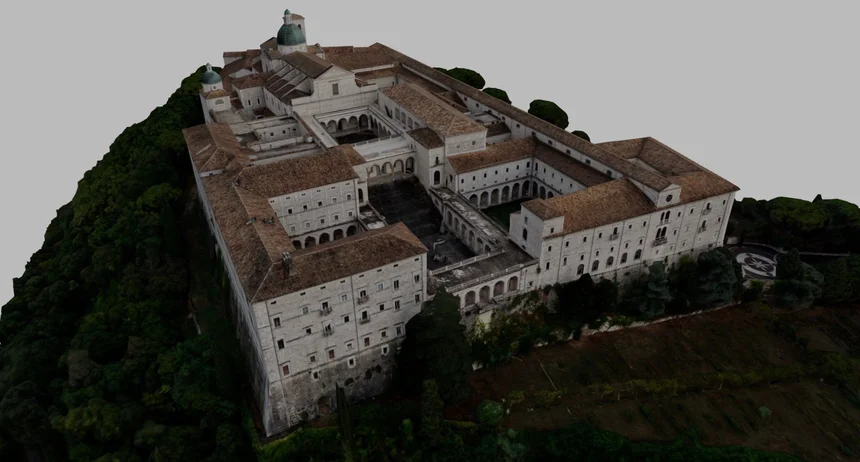
An interactive 3D model of Monte Cassino Abbey, the Benedictine monastery founded by St. Benedict in 529.

Explore Abbey of Montecassino with an interactive 3D model on FUNES.WORLD. High above the Liri Valley, perched precariously yet defiantly on a prominent hill in Lazio, Italy, stands Monte Cassino Abbey – not merely a structure of stone, but a living testament to humanity's enduring spirit. This is the Mother House of the Benedictine Order, a spiritual crucible where the very foundations of Western monasticism were forged. For over 1,500 years, its history has been a relentless cycle of destruction and rebuilding, a saga etched into its very foundations, reminding us that true resilience is not about avoiding the fall, but in the unwavering will to rise again. The story begins in 529 AD, when St. Benedict of Nursia chose this formidable site, an ancient Roman fortification dedicated to Sancti Martini and a pagan temple to Apollo, as the cradle for his revolutionary vision. Here, amid the echoes of forgotten gods, he established the Benedictine Rule, a simple yet profound philosophy of "Ora et Labora" – Prayer and Work. It was a rule that would profoundly influence the spiritual and cultural landscape of Europe for centuries. Imagine the quiet, disciplined rhythm of those first monks, their chisels shaping local stone, their hands tilling the soil, their voices raised in prayer, transforming a pagan mount into a beacon of Christian learning. This nascent center of spirituality grew rapidly, only to be abruptly silenced around 577 AD when the Lombards swept through, sacking the monastery and scattering the monks to Rome, leaving behind a smoldering ruin. Yet, Monte Cassino was destined for rebirth. Around 717 AD, at the behest of Pope Gregory II, Abbot Petronax initiated the second foundation. With Carolingian support, the abbey flourished anew, blooming into a vibrant cultural hub. Its scriptorium became renowned, a silent engine of civilization where classical texts, often fragile scrolls on the verge of disappearing, were meticulously preserved and transcribed by…

Available on

Search by image

Upload a reference to find previews with similar colors, contrast, and detail.

Abbey of Montecassino

Abbey of Montecassino
FunesFree
3D Models
License not indexed
  • i Check the terms on the original listing.
Show full terms

Explore Abbey of Montecassino with an interactive 3D model on FUNES.WORLD. High above the Liri Valley, perched precariously yet defiantly on a prominent hill in Lazio, Italy, stands Monte Cassino Abbey – not merely a structure of stone, but a living testament to humanity's enduring spirit. This is the Mother House of the Benedictine Order, a spiritual crucible where the very foundations of Western monasticism were forged. For over 1,500 years, its history has been a relentless cycle of destruction and rebuilding, a saga etched into its very foundations, reminding us that true resilience is not about avoiding the fall, but in the unwavering will to rise again. The story begins in 529 AD, when St. Benedict of Nursia chose this formidable site, an ancient Roman fortification dedicated to Sancti Martini and a pagan temple to Apollo, as the cradle for his revolutionary vision. Here, amid the echoes of forgotten gods, he established the Benedictine Rule, a simple yet profound philosophy of "Ora et Labora" – Prayer and Work. It was a rule that would profoundly influence the spiritual and cultural landscape of Europe for centuries. Imagine the quiet, disciplined rhythm of those first monks, their chisels shaping local stone, their hands tilling the soil, their voices raised in prayer, transforming a pagan mount into a beacon of Christian learning. This nascent center of spirituality grew rapidly, only to be abruptly silenced around 577 AD when the Lombards swept through, sacking the monastery and scattering the monks to Rome, leaving behind a smoldering ruin. Yet, Monte Cassino was destined for rebirth. Around 717 AD, at the behest of Pope Gregory II, Abbot Petronax initiated the second foundation. With Carolingian support, the abbey flourished anew, blooming into a vibrant cultural hub. Its scriptorium became renowned, a silent engine of civilization where classical texts, often fragile scrolls on the verge of disappearing, were meticulously preserved and transcribed by diligent hands, each stroke of the quill a defiant act against oblivion. This was a medieval golden age, adorned with new mosaics and frescoes, and a monumental church building, only for history to tragically repeat itself. In 883 AD, Saracen raiders swept across the mount, once again sacking and burning the monastery. The mountain grieved, but the spirit of Benedict endured. The third foundation, commencing around 950 AD, ushered in Monte Cassino's most glorious period. It was under Abbot Desider

An interactive 3D model of Monte Cassino Abbey, the Benedictine monastery founded by St. Benedict in 529.

View original listing