GetAssetPack

Ali Pasha Bazaar

Ali Pasha Bazaar
Price
Free
Type
3D Models
Dimensions
3D

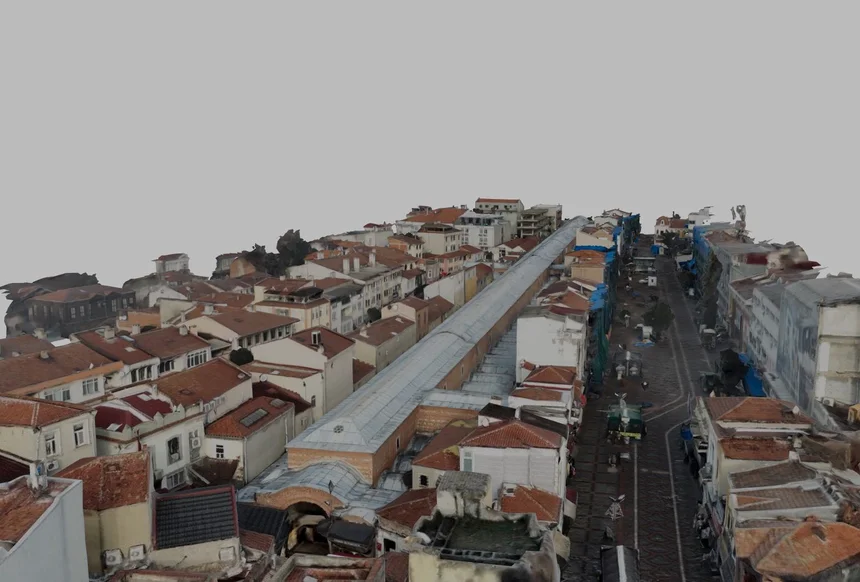
An interactive 3D model of Edirne's 320-meter-long bazaar, with domed intersections and vaulted ceilings.

Explore Ali Pasha Bazaar with an interactive 3D model on FUNES.WORLD. Beneath the domed intersections of Edirne’s Ali Pasha Bazaar, the grooves worn into limestone steps tell of 45 million footsteps—one for each olive, silk skein, and copper pot traded since 1569. Designed by Mimar Sinan for Grand Vizier Semiz Ali Pasha, this 320-meter-long artery of commerce still pulses with the rhythm of haggling and hammered copper, its vaulted ceilings hoarding four centuries of market cries like acoustic fossils. The bazaar’s genius reveals itself in paradox. Sinan, better known for soaring minarets, here bent his genius earthward, alternating russet brick and honey-toned limestone in bands so precise they mimic the warp and weft of Seljuk carpets. Peer upward where the barrel vaults converge: hidden among keystone carvings of pomegranates (symbol of Edirne’s guilds) are 2cm-wide ventilation shafts angled at 34 degrees—a geometry that funnels summer breezes into a perpetual sigh, cooling spices and tempers alike. Time layers here like market dust. Beneath modern LED shop signs, Ottoman Turkish price lists cling to doorframes in fading divani script. In 2019, restorers chiseling away cement from a Russo-Turkish War bullet scar uncovered a thrice-painted sign: 18th-century Armenian beneath 19th-century Greek beneath 20th-century Turkish—a palimpsest of Edirne’s shifting tongues. The deepest layer? A charcoal sketch of a six-fingered hand, likely a guild marker for a famed 16th-century coppersmith whose descendants still hammer trays in Shop No. 58. At noon, sunlight arrows through hexagonal skylights Sinan positioned to spotlight the central dome—once a negotiation space for cross-continental caravans. The patterns cast onto the stone floor replicate a 1573 ledger’s geometric flourishes, recently decoded by Trakya University as an abacus-like system for calculating exchange rates between Venetian ducats and Ottoman akçe. Merchants today unwittingly tread these ghostly numerals…

Available on

Search by image

Upload a reference to find previews with similar colors, contrast, and detail.

Ali Pasha Bazaar

Ali Pasha Bazaar
FunesFree
3D Models
License not indexed
  • i Check the terms on the original listing.
Show full terms

Explore Ali Pasha Bazaar with an interactive 3D model on FUNES.WORLD. Beneath the domed intersections of Edirne’s Ali Pasha Bazaar, the grooves worn into limestone steps tell of 45 million footsteps—one for each olive, silk skein, and copper pot traded since 1569. Designed by Mimar Sinan for Grand Vizier Semiz Ali Pasha, this 320-meter-long artery of commerce still pulses with the rhythm of haggling and hammered copper, its vaulted ceilings hoarding four centuries of market cries like acoustic fossils. The bazaar’s genius reveals itself in paradox. Sinan, better known for soaring minarets, here bent his genius earthward, alternating russet brick and honey-toned limestone in bands so precise they mimic the warp and weft of Seljuk carpets. Peer upward where the barrel vaults converge: hidden among keystone carvings of pomegranates (symbol of Edirne’s guilds) are 2cm-wide ventilation shafts angled at 34 degrees—a geometry that funnels summer breezes into a perpetual sigh, cooling spices and tempers alike. Time layers here like market dust. Beneath modern LED shop signs, Ottoman Turkish price lists cling to doorframes in fading divani script. In 2019, restorers chiseling away cement from a Russo-Turkish War bullet scar uncovered a thrice-painted sign: 18th-century Armenian beneath 19th-century Greek beneath 20th-century Turkish—a palimpsest of Edirne’s shifting tongues. The deepest layer? A charcoal sketch of a six-fingered hand, likely a guild marker for a famed 16th-century coppersmith whose descendants still hammer trays in Shop No. 58. At noon, sunlight arrows through hexagonal skylights Sinan positioned to spotlight the central dome—once a negotiation space for cross-continental caravans. The patterns cast onto the stone floor replicate a 1573 ledger’s geometric flourishes, recently decoded by Trakya University as an abacus-like system for calculating exchange rates between Venetian ducats and Ottoman akçe. Merchants today unwittingly tread these ghostly numerals, their smartphones echoing the arithmetic of ancestors. The bazaar breathes through its scars. During the 1878 siege, a Russian cannonball tore through the eastern arcade, its trajectory preserved in brickwork repairs that zigzag like a lightning bolt. Modern engineers stabilizing the damage discovered Sinan’s earthquake prophylaxis: flexible lead joints between limestone blocks, allowing walls to “dance” during tremors. At night, when shopkeepers roll down iron shutters, you can press an ear to

An interactive 3D model of Edirne's 320-meter-long bazaar, with domed intersections and vaulted ceilings.

View original listing