 GetAssetPack
Speyer Cathedral
- Price
- Free
- Type
- 3D Models
- Dimensions
- 3D
- Setting
- Medieval
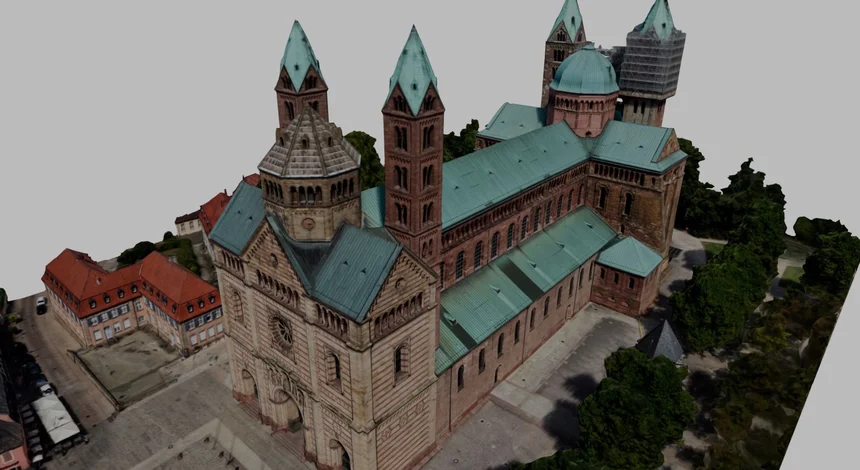
An interactive 3D model of Speyer Cathedral, a monumental Romanesque basilica built from red sandstone, with a Latin cross plan, transept, choir, and crypt.
Explore Speyer Cathedral with an interactive 3D model on FUNES.WORLD. Along the gentle curve of the Rhine, in the historic city of Speyer, a colossal form in warm red sandstone rises, dominating the skyline as it has for a thousand years. This is the Imperial Cathedral Basilica of the Assumption and St. Stephen, a name that barely hints at its monumental scale and the unyielding ambition carved into every block. It is, without question, one of the largest and most important Romanesque cathedrals in the world, a UNESCO World Heritage site, and the very stone heart of the Salian Dynasty's power and vision. This is not merely a building; it is a declaration, begun around 1025 CE, of imperial might, structural daring, and a profound, enduring faith. The story of Speyer begins with an emperor's dream of eternity. Conrad II, the formidable founder of the Salian Dynasty, initiated its construction with a clear, audacious intent: to build the largest church in the Western world, a towering testament to his divine right to rule and a fitting mausoleum for his imperial line. Imagine the sheer audacity of this undertaking in the early 11th century—thousands of tons of red sandstone quarried from the nearby Vosges, dragged by oxen, and hoisted by primitive machines, all to create a monument that would dwarf anything seen before. The Romanesque basilica, with its Latin cross plan, three naves, transept, choir, and crypt, was designed for a grandeur that spoke directly to God and subject alike. But even imperial ambition could not fully tame the challenges of medieval engineering. Sometime after its initial completion, the original vaulted nave collapsed. It was Conrad’s grandson, Henry IV, a monarch famous for his struggles with the Papacy, who undertook a massive and even more revolutionary rebuilding program from around 1082-1106. This was the birth of "Speyer II," a pivotal moment in architectural history. Henry IV’s master builders introduced a systematic groin vaulting…
Available on
- Funes Free