GetAssetPack

Uzunkopru Long Bridge

Uzunkopru Long Bridge
Price
Free
Type
3D Models
Dimensions
3D
Setting
Medieval

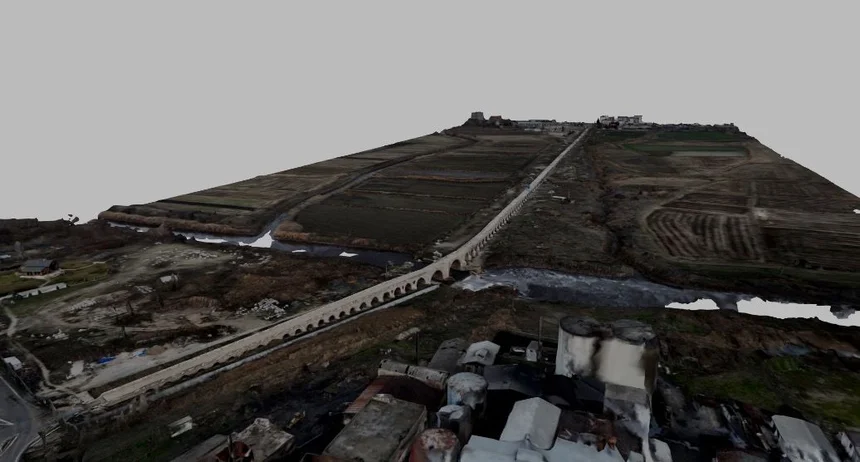
An interactive 3D model of Uzunkopru Long Bridge, a medieval stone bridge with 172 arches.

Explore Uzunkopru Long Bridge with an interactive 3D model on FUNES.WORLD. When dawn mist slithers over the Ergene River, Uzunköprü stirs. This 1,392-meter stone serpent—coiled across the water since 1443—stretches its 172 arched vertebrae toward the Balkan horizon, each limestone joint bearing the sweat of Sultan Murad II’s engineers. For 580 years, its flanks have channeled crusaders and refugees, tank columns and tractor trailers, yet its spine remains unbroken: the world’s longest surviving medieval stone bridge, still breathing beneath modern tires. Architect Müslihiddin, facing a river that swells from trickle to torrent each spring, designed arches like a hydrologist’s chessboard—pointed spans for high water (15 meters wide), rounded ones for calm seasons (5 meters). His masons carved triangular cutwaters sharper than spearheads, their edges still slicing the Ergene’s currents into docile ribbons. The materials sing of locality: honey-toned limestone from Kırklareli quarries, sandstone blocks flecked with fossilized reeds from the riverbank. Look closely and you’ll find the bridge’s hidden ledger: chisel grooves diagonal on rainy-day blocks (cut under cloud cover to keep marks crisp), horizontal on sun-baked ones. Midway across, a weathered dome rises—the mescit. This prayer niche, its mihrab alcove facing Mecca, once hosted merchants wiping Balkan mud from their brows before prostration. Inside, soot stains cling to ceiling joints where travelers hung oil lamps; outside, Arabic inscriptions commemorate Murad II’s vision: “Let this bridge unite what waters divide.” But the true devotion lies in the labor. Payroll records from 1432 surface in Edirne’s archives: “372 akçe to quarryman Ali, 15 to lime burner Fatma.” Fatma’s kilns worked ceaselessly, their chalky breath bonding 200,000 tons of stone. Modern cement analysis reveals her secret: crushed terracotta mixed with lime, creating mortar flexible enough to dance with earthquakes. Each restoration layer…

Available on

Search by image

Upload a reference to find previews with similar colors, contrast, and detail.

Uzunkopru Long Bridge

Uzunkopru Long Bridge
FunesFree
3D Models
License not indexed
  • i Check the terms on the original listing.
Show full terms

Explore Uzunkopru Long Bridge with an interactive 3D model on FUNES.WORLD. When dawn mist slithers over the Ergene River, Uzunköprü stirs. This 1,392-meter stone serpent—coiled across the water since 1443—stretches its 172 arched vertebrae toward the Balkan horizon, each limestone joint bearing the sweat of Sultan Murad II’s engineers. For 580 years, its flanks have channeled crusaders and refugees, tank columns and tractor trailers, yet its spine remains unbroken: the world’s longest surviving medieval stone bridge, still breathing beneath modern tires. Architect Müslihiddin, facing a river that swells from trickle to torrent each spring, designed arches like a hydrologist’s chessboard—pointed spans for high water (15 meters wide), rounded ones for calm seasons (5 meters). His masons carved triangular cutwaters sharper than spearheads, their edges still slicing the Ergene’s currents into docile ribbons. The materials sing of locality: honey-toned limestone from Kırklareli quarries, sandstone blocks flecked with fossilized reeds from the riverbank. Look closely and you’ll find the bridge’s hidden ledger: chisel grooves diagonal on rainy-day blocks (cut under cloud cover to keep marks crisp), horizontal on sun-baked ones. Midway across, a weathered dome rises—the mescit. This prayer niche, its mihrab alcove facing Mecca, once hosted merchants wiping Balkan mud from their brows before prostration. Inside, soot stains cling to ceiling joints where travelers hung oil lamps; outside, Arabic inscriptions commemorate Murad II’s vision: “Let this bridge unite what waters divide.” But the true devotion lies in the labor. Payroll records from 1432 surface in Edirne’s archives: “372 akçe to quarryman Ali, 15 to lime burner Fatma.” Fatma’s kilns worked ceaselessly, their chalky breath bonding 200,000 tons of stone. Modern cement analysis reveals her secret: crushed terracotta mixed with lime, creating mortar flexible enough to dance with earthquakes. Each restoration layer tells of near-death and rebirth. In 1653, floodwaters swallowed 12 arches—until Janissary troops diverted the river using a technique from Sinan’s playbook: temporary dams built from soldiers’ shields. The 19th-century repairs under Sultan Abdülmecid left a stonemason’s cheeky signature: one replacement arch bears Ottoman Turkish graffiti, “Hungary’s rain is Edirne’s ache.” Today, Uzunköprü’s wounds resurface as warnings. Laser scans in 2019 revealed cracks propagating along original mortar lines—no

An interactive 3D model of Uzunkopru Long Bridge, a medieval stone bridge with 172 arches.

View original listing