GetAssetPack

West Stupa of Yanshou Monastery
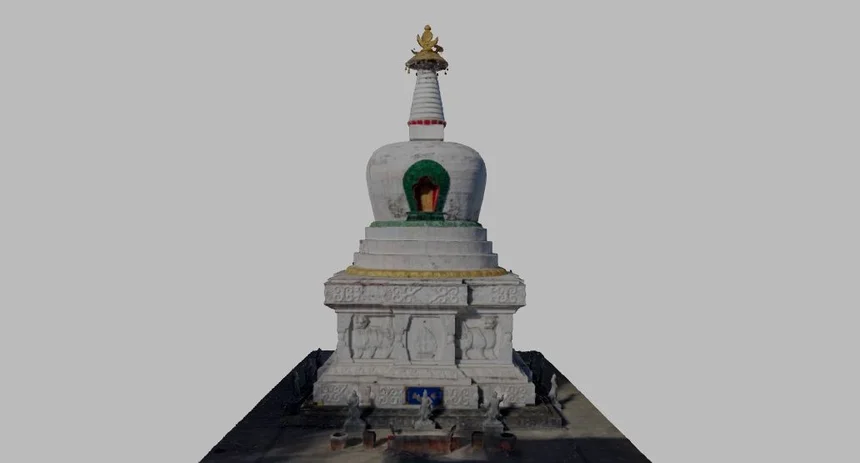
West Stupa of Yanshou Monastery
Price
Free
Type
3D Models
Dimensions
3D
Setting
Asian

An interactive 3D model of a Qing-era West Stupa and temple, originally a Tibetan Buddhist monastery of the Gelug school.

Explore West Stupa of Yanshou Monastery with an interactive 3D model on FUNES.WORLD. The construction of the West Stupa and its associated temple, Yanshou Temple, was ordered by Hong Taiji, the second emperor of the Qing Dynasty. Construction began in 1643 (the eighth year of the Chongde reign) and was completed in the summer of 1645 (the second year of the Shunzhi reign). The four stupas and their temples were built to pacify the region and were intended to represent the four Heavenly Kings of Buddhism, with the West Stupa symbolizing the wish for the emperor's long life. Originally, Yanshou Temple was a Tibetan Buddhist monastery of the Gelug school. Over time, particularly during the late Qing Dynasty, the temple suffered significant damage due to wars in the region. By the 1930s, the stupa had fallen into a state of severe disrepair. In 1968, the original stupa was dismantled due to its dilapidated condition. During the demolition, a crypt was discovered which contained precious cultural relics, including Buddhist statues. In 1998, the Shenyang municipal government funded the reconstruction of both the West Stupa and Yanshou Temple on the original site, aiming to restore a famous "Shengjing" scenic spot. Following its reconstruction, the temple was converted into a Han Chinese Buddhist monastery.

Available on

Search by image

Upload a reference to find previews with similar colors, contrast, and detail.

West Stupa of Yanshou Monastery

West Stupa of Yanshou Monastery
FunesFree
3D Models
License not indexed
  • i Check the terms on the original listing.
Show full terms

Explore West Stupa of Yanshou Monastery with an interactive 3D model on FUNES.WORLD. The construction of the West Stupa and its associated temple, Yanshou Temple, was ordered by Hong Taiji, the second emperor of the Qing Dynasty. Construction began in 1643 (the eighth year of the Chongde reign) and was completed in the summer of 1645 (the second year of the Shunzhi reign). The four stupas and their temples were built to pacify the region and were intended to represent the four Heavenly Kings of Buddhism, with the West Stupa symbolizing the wish for the emperor's long life. Originally, Yanshou Temple was a Tibetan Buddhist monastery of the Gelug school. Over time, particularly during the late Qing Dynasty, the temple suffered significant damage due to wars in the region. By the 1930s, the stupa had fallen into a state of severe disrepair. In 1968, the original stupa was dismantled due to its dilapidated condition. During the demolition, a crypt was discovered which contained precious cultural relics, including Buddhist statues. In 1998, the Shenyang municipal government funded the reconstruction of both the West Stupa and Yanshou Temple on the original site, aiming to restore a famous "Shengjing" scenic spot. Following its reconstruction, the temple was converted into a Han Chinese Buddhist monastery.

An interactive 3D model of a Qing-era West Stupa and temple, originally a Tibetan Buddhist monastery of the Gelug school.

View original listing