GetAssetPack

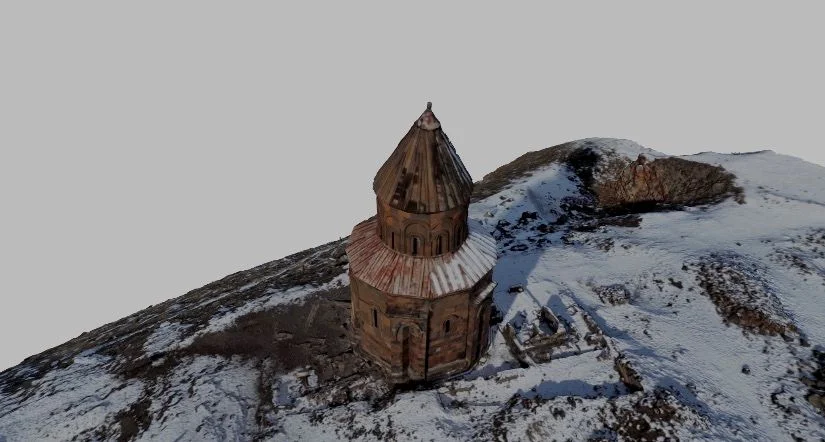
St Gregory Church in Ani

St Gregory Church in Ani
Price
Free
Type
3D Models
Dimensions
3D
Setting
Medieval

An interactive 3D model of the 13th-century Church of St. Gregory the Illuminator in Ani, known for its frescoes and volcanic stonework.

Explore St Gregory Church in Ani with an interactive 3D model on FUNES.WORLD. At the edge of modern Turkey’s border with Armenia, where the Akhurian River cuts through basalt cliffs, stands a church that refuses to let its colors fade. The Church of Saint Gregory the Illuminator, commissioned in 1215 by Armenian merchant-prince Tigran Honents, is a paradox: its collapsed dome lets in shafts of light that now illuminate frescoes hidden for centuries, while bullet scars from 20th-century conflicts pockmark walls adorned with saints. Here, in the ghost city of Ani, stone and pigment conspire to recount a saga of Silk Road splendor. In 2012, conservators probing a salt-crusted fresco of the Virgin Mary uncovered a hidden ledger. Scratched into the plaster beneath the 13th-century paint were cargo manifests—figs, saffron, and silver ingots—in Armenian, Persian, and Georgian. Tigran Honents, it seems, built his celestial tribute not just with prayers, but with the ink of commerce. When construction began in 1215, Ani was a phoenix rising under the Zakarid dynasty, which had reclaimed the city from Seljuk Turks. Honents sourced volcanic tuff from three quarries—red from Ani’s northern cliffs, black from Mount Ararat’s foothills, and cream from Georgian highlands—each hue mapping his trade routes. Masons carved stones with “X” marks where khachkars (cross-stones) would later be inserted, creating a modular sacred geometry that fused spiritual symbolism with mercantile pragmatism. The church’s interior reveals Honents’ ambition to reconcile competing cultures. He recruited artists from Trebizond’s Byzantine workshops and Georgian manuscript illuminators, forcing rivals into collaboration. The north wall’s Christ Pantocrator bears the almond eyes of Armenian iconography, while the dome’s surviving Seraphim swirl with Georgian gold leaf. In a bold act of self-memorialization, Honents inserted his portrait into the Martyrdom of Saint Gregory fresco, kneeling in a fur-lined…

Available on

Search by image

Upload a reference to find previews with similar colors, contrast, and detail.

St Gregory Church in Ani

St Gregory Church in Ani
FunesFree
3D Models
License not indexed
  • i Check the terms on the original listing.
Show full terms

Explore St Gregory Church in Ani with an interactive 3D model on FUNES.WORLD. At the edge of modern Turkey’s border with Armenia, where the Akhurian River cuts through basalt cliffs, stands a church that refuses to let its colors fade. The Church of Saint Gregory the Illuminator, commissioned in 1215 by Armenian merchant-prince Tigran Honents, is a paradox: its collapsed dome lets in shafts of light that now illuminate frescoes hidden for centuries, while bullet scars from 20th-century conflicts pockmark walls adorned with saints. Here, in the ghost city of Ani, stone and pigment conspire to recount a saga of Silk Road splendor. In 2012, conservators probing a salt-crusted fresco of the Virgin Mary uncovered a hidden ledger. Scratched into the plaster beneath the 13th-century paint were cargo manifests—figs, saffron, and silver ingots—in Armenian, Persian, and Georgian. Tigran Honents, it seems, built his celestial tribute not just with prayers, but with the ink of commerce. When construction began in 1215, Ani was a phoenix rising under the Zakarid dynasty, which had reclaimed the city from Seljuk Turks. Honents sourced volcanic tuff from three quarries—red from Ani’s northern cliffs, black from Mount Ararat’s foothills, and cream from Georgian highlands—each hue mapping his trade routes. Masons carved stones with “X” marks where khachkars (cross-stones) would later be inserted, creating a modular sacred geometry that fused spiritual symbolism with mercantile pragmatism. The church’s interior reveals Honents’ ambition to reconcile competing cultures. He recruited artists from Trebizond’s Byzantine workshops and Georgian manuscript illuminators, forcing rivals into collaboration. The north wall’s Christ Pantocrator bears the almond eyes of Armenian iconography, while the dome’s surviving Seraphim swirl with Georgian gold leaf. In a bold act of self-memorialization, Honents inserted his portrait into the Martyrdom of Saint Gregory fresco, kneeling in a fur-lined robe painted with silver leaf from his caravans, proffering a model of the church like a merchant displaying his finest wares. Architectural ingenuity hides within the cruciform plan. Four pendentives transition the square nave to a circular dome—now lost—their surfaces angled at 55 degrees to amplify chants. The basalt walls vary intentionally in density: denser blocks form an earthquake-resistant base, while porous upper layers regulate humidity to preserve frescoes. This engineering foresight pro

An interactive 3D model of the 13th-century Church of St. Gregory the Illuminator in Ani, known for its frescoes and volcanic stonework.

View original listing