 GetAssetPack
Pro-R2
- Type
- Sounds
A reverb plug-in supports immersive multichannel formats up to 9.1.6 and includes vintage and plate algorithms, impulse-response import, ducking, and gating.
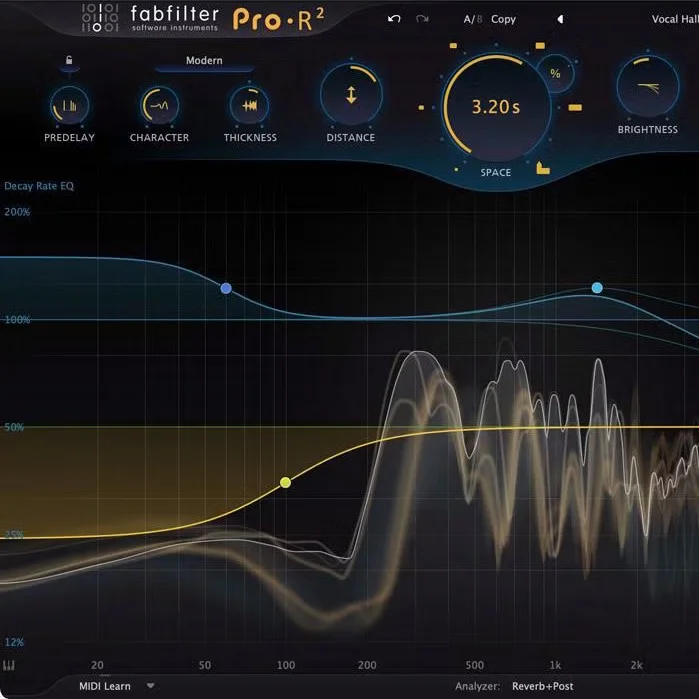
Pro-R 2 brings a raft of new next-gen features to what was already a widely respected reverb plug-in, including comprehensive multichannel compatibility, two brand-new reverb algorithms, IR import and replication, ducking and gating functions, analog-style saturation, and much more. It is a huge technological and functional leap forward for the plug-in, and one made without any compromise to the slick workflow and stellar sound quality that Pro-R users already know and love. Full immersive audio support Place reverbs in three-dimensional space with support for immersive channel layouts up to 9.1.6 Dolby Atmos. Pro-R 2 configures itself for multichannel formats automatically whenever it is added to a surround channel, and individual Decay Rate and Post EQ bands can be applied to any combination of channels using the new Speakers panel. Meanwhile, the new Surround Settings panel provides straightforward controls for balancing the relative levels of every reverb parameter — Predelay, Character, Decay Rate, etc — between the front and back of the immersive space. A massive amount of work has gone into the implementation of surround cross feeding, delivering an exceptionally convincing sense of space; and with its intuitive approach and liberating flexibility, ProR 2 yields spectacular results without letting complicated channel routing get in the way of creativity. All-new Vintage and Plate reverb Styles Expanding on the clean, natural sound of Pro-R, Pro-R 2 introduces two new reverb algorithms that bring a diversity of retro flavors to mixes. ‘Vintage’ is inspired by classic digital reverb units of the ’80s and ’90s, and is the go-to for long, bright hyper-real spatial ambiences, while ‘Plate’ serves up the evocative metallic sound of plate reverb — ideal for drums and vocals. Together, the two new styles broaden Pro-R 2’s spatializing remit out from the realistic physical environments for which its predecessor was known into more overtly synthetic textural…